
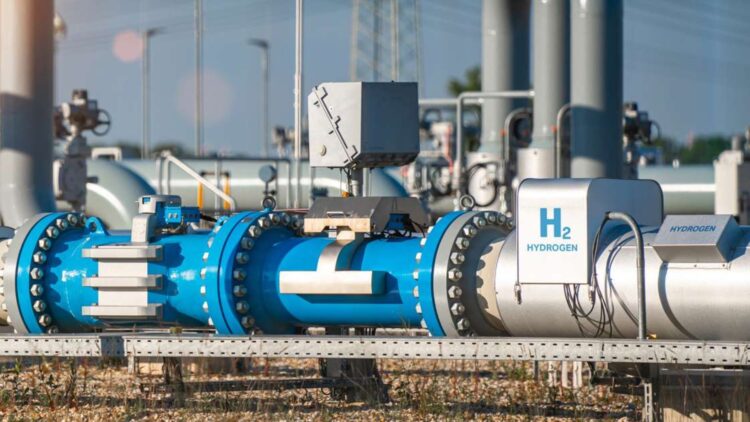
Natural hydrogen is closer to be in our lives! You may have heard about hydrogen because it is being used a lot in the automotive industry and many other fields. Why? Because this is one of the most promising clean fuels for the future. For decades, scientists and governments have considered it as an alternative to replace fossil fuels, but most of the hydrogen was artificially produced through expensive and polluting processes, until now.
New studies show that there are huge natural hydrogen (also known as white hydrogen) reserves in the Earth’s depths. If we make the most of them, this resource could provide energy to the entire humanity for thousands of years without generating greenhouse gases. So, let’s learn more about this, shall we?
Natural hydrogen
What has been known is that hydrogen was produced through fossil fuels or electrolysis, which is a process in which water molecules are separated by using electricity. Both methods require a great energy consumption and they tend to release CO₂.
However, natural hydrogen is made in a geological way when water interacts with rocks rich in iron under the Earth crust. Throughout billions of years, this process has generated huge amounts of pure hydrogen trapped in porous rocks and sealed by natural geological formations.
Now, scientists believe these deposits could be bigger than they thought, which make natural hydrogen a potential game-changer for the global energy landscape.
Importance of this element
This natural hydrogen discovery offers key benefits that make it a very good option for industries like steelmaking, aviation, and shipping, where decarbonization is especially difficult. So, let’s have a look at those benefits:
- Clean energy: It produces no carbon dioxide or greenhouse gases when used.
- Vast supply: Research suggests enough hydrogen has accumulated over geological time to power human civilization for up to 170,000 years.
- Lower costs: Unlike industrial hydrogen, which requires energy-intensive production, natural hydrogen could be cheaper if extracted efficiently.
The U.S. puts its faith in hydrogen
In the U.S., researchers identified that almost 30 states have geological conditions apt to accumulate natural hydrogen. For example, Kansas is considered one of the places with the most potential for it.
Private companies are already investing in this field, Koloma (backed by Bill Gates along with Hy-Terra and Snowfox) is exploring hydrogen traps around the country. Big corporations like BP and Rio Tinto are also funding projects to find and make the most of this resource.
These investments prove that natural hydrogen is seen as a key piece in the energy strategy in the U.S. in the long term.
Global race
The U.S. is not the only country interested in this resource, others like France, Australia and Albania are also investigating underground hydrogen reservoirs. For example, in France significant deposits were found in ancient rock formations called ophiolites.
This international race reflects the optimism on how hydrogen can speed up the transition toward a net-zero emissions world.
Challenges
Even though this element has a huge potential, the extraction is complex having in mind the following challenges:
- Biological consumption: Microbes underground consume hydrogen, reducing available amounts.
- Uncertainty: Scientists are still unsure about the total recoverable volume.
- Technical issues: Locating, capturing, and extracting hydrogen requires new techniques.
- Economics: Profitability remains unclear until commercial-scale projects succeed.
For now, researchers are very optimistic but they warn there’s still plenty to study before natural hydrogen can be integrated into the global energy system.
The future
If we have access to underground deposits, natural hydrogen could transform energy production. It offers a reliable, carbon-free fuel source that already exists in nature, eliminating the need for energy-intensive manufacturing. So, a hydrogen-powered future would mean:
- Dramatically reduced dependence on fossil fuels.
- Near-zero emissions across heavy industry and transportation.
- A sustainable energy supply lasting for millennia.
That’s why many experts consider hydrogen one of the most exciting discoveries for clean energy in this century. We’ll see how everything goes, but it apparently seems like a promising project, don’t you think so?