
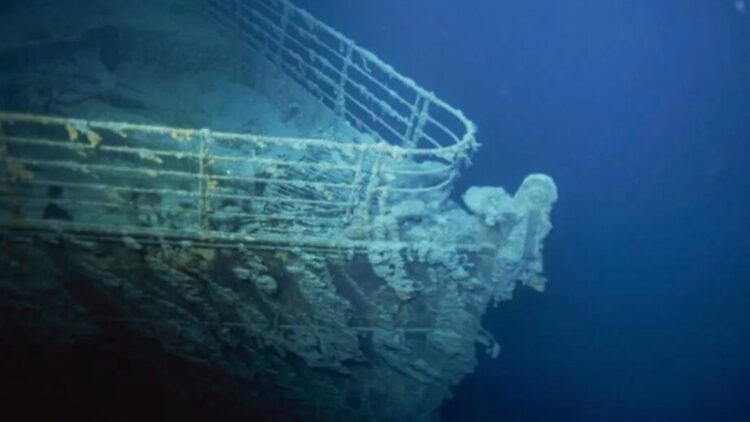
Let’s talk about the Titanic. I’m sure most people know about it, whether the real story or the movie. However, today, we want to focus on its tragic sinking that took place in 1912 after crashing against an iceberg. Many people died, specifically 1,500 deaths, and it was something that following generations remember.
For decades, nobody knew where the Titanic exactly was under the North Atlantic. But, in 1985, a special mission showed the ship’s location and the ocean exploration changed forever. So, let’s find out more about this historic event.
Decades of mystery
The Titanic sank on April 15 of 1912, but more than 70 years went by until its location was found. It was known the general area of the wreck, but not the exact point.
The Titanic was surrounded by legend and tragedy, and the world was hoping someone could find it someday. And that day came, September 1 of 1985, when the underwater cameras showed an image of a rust-covered boiler on the seafloor. Exactly, this was the first visual proof of the Titanic being there after so long.
One mission, two goals
The finding was no coincidence; the oceanographer Robert Ballard, along with the French Institute IFREMER, led the mission aboard the U.S. research vessel Knorr. Officially, the aim was to research the underwater nuclear remains that sank during the Cold War.
Ballard, who collaborated with the U.S. Navy, made a deal: if he achieved the submarine mission, he could use the rest of the time to look for the Titanic. That chance led him to fulfill a personal dream and solve one of the biggest mysteries of the 20th century.
Key technology
For this mission they used a revolutionary system for the time: a remote-operated vehicle called ARGO, created by Woods Hole Oceanographic Institution. This robot had cameras that transmitted images in real time from the bottom of the sea. Although it was designed to inspect nuclear submarines, ARGO became the perfect tool to track the Titanic.
A change in strategy
The French team tried to find the Titanic with a sonar, but it failed. Ballard decided to change the focus, so instead of looking directly for the wreck, he looked for the debris field that should have formed once it sank.
This idea was crucial because on September 1, the ARGO cameras revealed scattered wreckage and then a large boiler. Following the track, the Titanic’s hull finally appeared–although deteriorated, but still recognizable.
A solemn discovery
Finding the Titanic was a historic moment, but it wasn’t a loud celebration because the team understood they were witnessing a mass grave–a place where thousands of lives were lost. That’s why they experienced this discovery with respect and reserved excitement.
Titanic exploration in 1986
One year later, in 1986, Ballard and his team went back to the same place with new tools: a manned submarine called Alvin and the robot Jason Jr. This was the first time a human being could directly observe the grand staircase, collapsed cabins, and decayed halls underwater.
This decision meant a new era for underwater archaeology. Since this moment, new technologies have been developed: autonomous vehicles, advanced sonars, and 3D maps to study the ocean floor.
Scientific and cultural legacy
This finding ended a historic mystery and revolutionized science. It taught us that the deep ocean is a human history archive with thousands of chapters to discover. Scientists even identified unique bacteria on the wreck’s steel hull, slowly eating away at the ship.
The original expedition team of oceanographers, engineers, and technicians left behind a legacy still studied in universities as a model of teamwork, strategy, and respect for history.
Who would have thought Ballard’s change in strategy could become such a milestone?