
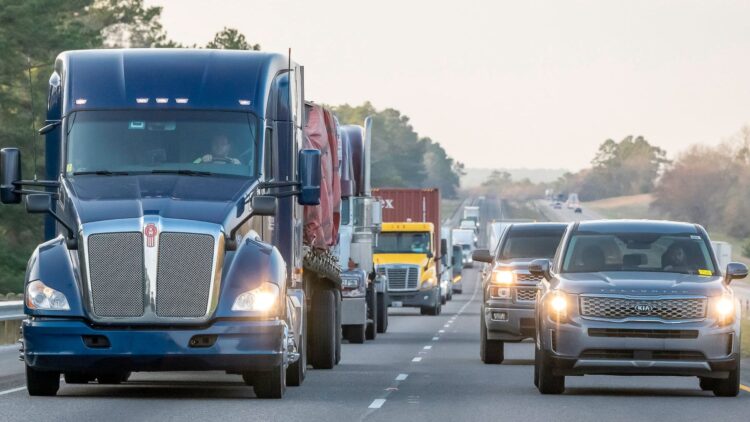
Goodbye to truck speed limiters in the U.S.! For years transportation authorities debate on whether heavy trucks should be capped at a maximum speed to improve safety and efficiency. However, according to a notice quietly published in the Federal Register, the Federal Motor Carrier Safety Administration (FMCSA) and the National Highway Traffic Safety Administration (NHTSA) have withdrawn the proposal.
This decision closes the door to the measure that would have made over 26,000 pounds trucks have devices to limit their maximum speed between 60 and 80 miles per hour. There’s always changes and controversy when it comes to speed limits, but let’s find out more about this specific change.
Why speed limiters were proposed
The logic behind speed limiters on trucks is clear: heavy vehicles need more distance to stop and can cause more serious accidents than smaller cars if they go very fast.
Some studies show that trucks with lower limits experienced less crashes related to speed. What’s more, they highlighted additional benefits:
- Fuel efficiency: Trucks that drive slower use less fuel, which reduces costs for operators.
- Reduced engine wear: A steady, slower pace means less strain on the vehicle over time.
- Fewer high-speed collisions: Limiting maximum speed lowers the risk of fatal accidents.
This is why federal agencies considered speed limiters to be compulsory at the time.
Why was it withdrawn?
Despite potential benefits, the idea was controversial. In the end, the FMCSA and the NHTSA withdrew the plan for several reasons:
- Data gaps: Research and analyses had missing information on the true safety benefits and the economic impact.
- Public feedback: The comment process did not provide enough evidence to move forward with a final rule.
- Conflict with states: Many states already allow heavy vehicles to travel faster than 68 mph. A federal cap would clash with those state-level speed limits.
So, according to what agencies explained, imposing a federal limit could “undercut the ability of those states to set the speed limits they have deemed appropriate on their roadways.”
What would speed limiters have changed?
If this rule had been imposed, speed limiters would have significantly reduced truck speed in the majority of the U.S. Most of the states have speed limits over 68 mph, which trucks would have had to drive slower than the rest of the vehicles.
People defending this measure pointed out that this could save between 63 and 214 lives per year. However, critics stated that it wasn’t the best way to achieve road safety and that it could affect delivery efficiency.
Alternatives to speed limiters
Even though they were left out, there are other technological tools that are already helping reduce accidents. Many modern trucks include systems like:
- Forward collision warnings
- Automatic emergency braking
The FMCSA and the NHTSA recognize that these technologies could provide us with the same benefits as speed limiters without generating legal conflicts between states and the federal government.
Road safety without speed limiters
The withdrawal of this rule might seem like a step back, but authorities insist on road safety still being a priority. There are other current regulations and more measures being evaluated to keep roads safe.
For now, trucks will continue to follow statal speed limits, which means that, in some places, they could drive faster than 68 mph and, in others, they must go slow.
As you can see, even without speed limiters, road safety is still the centre of the U.S. transportation policy. But the most important thing is every time you drive, you must follow the rules and be careful because you are not just putting at risk your life, but others’.