
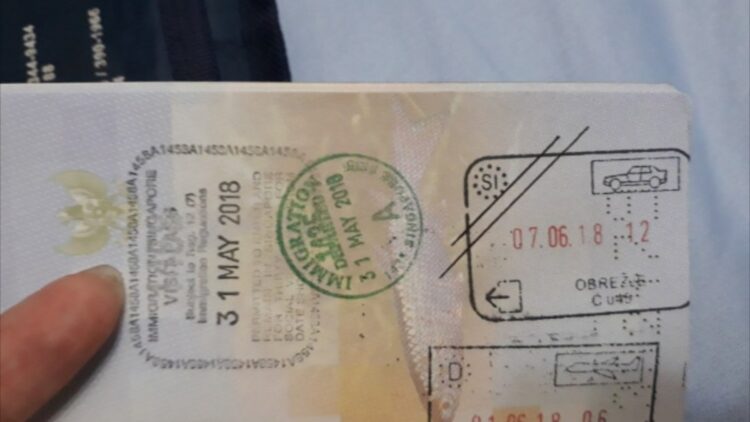
Traveling to Europe is getting complicated if you are a US citizen, and it is because Croatia will be the first country to ask fingerprints from Americans. Yes, like in a movie, starting on October 12, 2025, Croatia will require a new entry control and will become the first country to require fingerprints and a facial photo instead of the classic stamp in the passport.
It is the debut of the Entry/Exit System (EES), the big bet of the European Union to digitalize its borders.
No, there will no longer be ink stamps to show off on Pinterest, now the “stamp” will be digital and with biometrics, like unlocking your iPhone. They assure more security and fewer lines… but doubts keep appearing.. what about ETIAS and why is it not active in other countries as well?
How the EES works
It is called “Entry/Exit System” (EES) and it will forever replace passport stamps with a digital record that will be kept for three years. Instead of a border agent, there will be a self-service kiosk that will scan four fingerprints and your face, this way it will be much easier on later trips because they can verify your identity quickly if you are already in the system.
The European Commission assures that this system will speed up airports and reduce irregular entries. In Croatia it will start being applied in the airports of Zagreb and Dubrovnik, in addition to other international entry points.
EES is not the same as ETIAS
Here is the mess. The EES is the physical border control: fingerprints, photo and passport. The ETIAS will be something else: an electronic authorization that will have to be requested before traveling, similar to the ESTA that the United States requires.
The ETIAS will cost about 7.50 dollars, will be valid for three years and will start working at the end of 2026, when the EES is already implemented in the entire Schengen area. That means for a while both systems will coexist.
That is:
- ESS (kiosk): physical process at the border (the new system)
- ETIAS (website): because you will need a travel authorization that you will have to complete before leaving home.
And no, you cannot have one without the other.
Croatia gets ahead of the rest
The Croatian Ministry of the Interior confirmed that they will be the first to apply the EES. So starting in October any American who enters through Croatia will have to comply with the new protocol.
If you travel to France, Italy or Spain, for now everything will remain the same, with the stamp in the passport, at least until mid-2026. And yes, tourists and agencies are very confused with the phased implementation, but for now, that is what it is.
What it means for travelers
For now, if you are not traveling to Croatia, nothing. But, the reality is that the first trips will be a bit chaotic and there will be a little more waiting at the controls while both agents and travelers adapt, but once everyone adapts, Brussels insists that the change will bring more efficiency and security, so we will have to believe them. With a more precise digital record it will be more difficult to lose track of who enters and who leaves.
And after…?
The plan is that all the Schengen area has the EES implemented in the first half of 2026. From then on, ETIAS will come into play, which will require Americans and travelers from other visa-exempt countries to request the authorization online before flying.
It is the beginning of a new way of traveling. What today seems like a cumbersome procedure, in a few years will be routine and we will not even remember passport stamps.
The technological challenge is that, suddenly, simply with your fingerprints you can enter a country, if it will work or if it will remain an attempt only time will tell!