
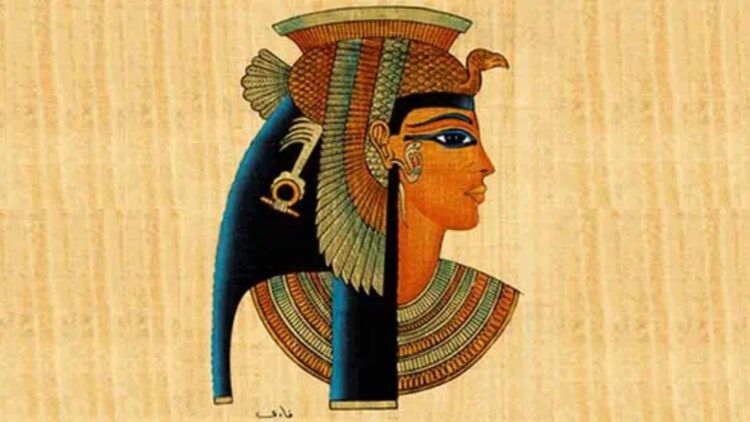
Something revealing about Cleopatra’s tomb was found in Alexandria. For centuries, Cleopatra VII’s tomb, the last queen of Ptolemaic Egypt, has been one of the greatest mysteries of history. Archaeologists have searched through tunnels, temples, and underground ruins to find the place where the queen and her lover Marco Antonio could have been buried. Now, a new discovery in Alexandria opens a new door on this research: a submerged harbor next to the Taposiris Magna temple.
Let’s appreciate what archaeologists do and learn more about interesting things about history, so let’s get started!
A forgotten harbor underwater
The Egyptian Ministry of Tourism and Antiquities has officially announced the finding of an ancient harbor submerged in front of Taposiris Magna. This discovery was led by Dominican archaeologist Kathleen Martínez, alongside oceanographic Robert Ballard (known for finding the Titanic) and an international team.
Research revealed remains of a great size: columns, cemented blocks, polished floors, and stone and metal anchors. What’s more, amphorae and vessels dated from the 1st century B.C., the same time when Cleopatra ruled, were also recovered. The most striking thing was that these structures aligned with an underground tunnel of more than 1,300 m that connected directly the temple with the sea.
This reinforces the idea that the place wasn’t just a religious center, but also a strategic harbor complex.
Taposiris Magna and Cleopatra
The Taposiris Magna temple is located about 45 km from Alexandria and it’s dedicated to Osiris and Isis. For more than 20 years, Matínes has excavated here and his theory says that Cleopatra wasn’t buried in Alexandria, watched by the Romans, but in this temple which is symbolically linked to the Goddess Isis (life and resurrection protector).
Previous excavations have already found coins with the face of the queen, bronze statuettes, pottery, and Ptolemaic architectural fragments. However, the discovery of the harbor changes the place: no it’s not just considered a temple, but also a ceremonial and maritime complex of huge importance.
The mystery of Salam 5
One of the most mysterious submarine sectors has been named ‘’Salam 5’’. There, rectangular structures, basalt bases, and pillars resembling those in the temple. These could have been auxiliary port buildings or ritual installations linked to the cult of Isis.
The connection of Salam 5 with the underground tunnel and the temple led researchers to think this location could have been chosen intentionally to hide Cleopatra and Marco Antonio after their defeat in the Battle of Actium in the 31 B.C.
Transformations in the shore of Alexandria
The landscape we see today on the shore of Alexandria is nothing like it used to be 1,000 years ago. Earthquakes and tsunamis that happened between the 4th and the 14th centuries made most of the shore sink under the Mediterranean Sea. Currently, the shore line is about 4 km from the original place, which explains why most of this place is underwater.
Keys of a secret plan
Martínez’s hypothesis is clear: Cleopatra looked for a place far from Roman control, charged with religious symbolism and connected to the sea to seal her immortality. Not only did she want a tomb, but also a sanctuary. Even though some scholars are still skeptical about it, proofs collected in these two decades have changed the vision of Taposiris Magna.
What’s next
The international team is planning new submarine explorations and new drilling in Salam 5. Also, they are going to analyze organic remains and materials to have a precise chronology and function of the harbor.
While the tomb is not found, each finding reveals that under Alexandria’s waters there are more than ruins, there are pieces of political and spiritual history of Egypt.
A legacy in construction
Since 2005, Kathleen Martínez has investigated this mystery very closely, making Alexandria and its surroundings the center of one of the most exciting pursuits of modern archaeology.
Even though Cleopatra’s tomb is not found yet, what has been discovered until now rewrites entire chapters of Hellenistic Egypt. And shows that, even after more that 2 millennia, Cleopatra is still the queen who rejected being forgotten.