
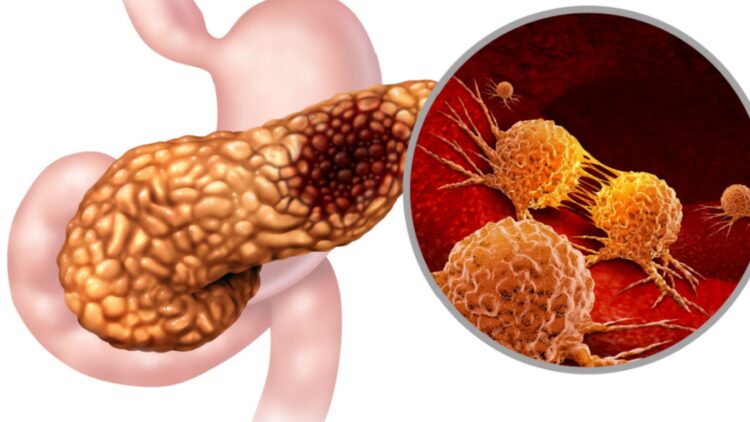
Pancreatic cancer is one of the toughest that exist. Less than 10% of patients manage to survive five years after diagnosis, and it is no coincidence: it spreads very quickly to organs like the liver or lungs. For decades, science did not quite understand how it managed to bypass the barriers that in theory should stop it. Now, a team from Cornell University has named the missing piece in this puzzle: a biological receptor called ALK7.
The cancer that does not allow itself to be contained
Pancreatic ductal adenocarcinoma, which is the most common type, has a behavior that puzzles. It is surrounded by fibrous tissue that should serve as a brake, but even so it escapes and spreads with surprising ease. That mystery is what explains part of its very high mortality.
The role of ALK7
The research published in Molecular Cancer shows that ALK7 activates two key mechanisms:
- It drives the process known as epithelial-mesenchymal transition, which makes tumor cells become more mobile.
- It stimulates the production of enzymes capable of weakening the walls of blood vessels, which opens the way for tumor cells to enter the blood.
In the words of the lead author, Esak Lee, ALK7 gives cancer “both the engine to move and the tools to invade”.
The technology that made it possible
The breakthrough cannot be understood without the organ-on-chip platform, created in Lee’s own laboratory. This system mimics how human blood vessels work and makes it possible to clearly see how tumors interact with them. Thanks to this tool, an old contradiction was resolved: some studies suggested that ALK7 slowed cancer, while others said the opposite. Here it became clear: its function is to drive the expansion of the tumor.
The time window is decisive
The study also makes it clear that blocking ALK7 only works if it is done very early, before the tumor cells reach the blood. Once they are circulating, the effectiveness of any blockade drops sharply. As Lee explained, “once the cells circulate freely, the blockade ceases to be useful”. Hence the importance of early diagnosis and therapies that act right at that critical moment.
Beyond pancreatic cancer
Although the study focused on this specific tumor, its implications may go further. What has been learned about ALK7 could also be applied to other very aggressive cancers. And the organ-on-chip tool itself opens the door to investigating how different cancer cells or immune system cells interact in similar environments.
The discovery of ALK7 as a key piece in pancreatic cancer metastasis is a hopeful step in one of the deadliest diseases that exist. Identifying when and how the tumor becomes vulnerable can make the difference in treatments and survival.
The combination of new technologies like organ-on-chip and a deeper understanding of these processes opens the door to a future in which stopping the spread of cancer ceases to be impossible.
Q&A
- Why is pancreatic cancer so serious?: Because it spreads very quickly and is one of the most aggressive cancers to date. Out of every 100 people diagnosed, only 10 survive more than five years.
- What did the scientists discover?: They found a molecule that helps cancer move through the body (metastasis)
- But… wasn’t the tumor supposed to be surrounded by a thick layer that stopped it? Yes, for years scientists wondered how it was possible for cancer to escape if it had that barrier. This discovery clarifies that ALK7 helps break that barrier and makes it easier for cancer to enter the blood.
- Is there a key moment to act? Yes. The most important thing they discovered is that you have to act just before the cancer enters the blood. If ALK7 is blocked in time, the tumor does not move.
- Does this finding only work for pancreatic cancer? No. This technology can help study other types of cancer.
- What does this mean for the future? It means hope. If cancer is detected in time and ALK7 can be blocked, treatments could be created to prevent cancer from spreading.