
For a long time, hydrogen has been seen as the great clean fuel that could one day replace oil and gas. Nations such as Germany, Japan, and South Korea have already poured billions into creating green hydrogen as a cornerstone of their future energy plans. But now, a new study highlights another contender — a fuel that could be even more efficient, easier to make, and ready to use today. Its name is green methanol.
What’s most surprising is that this cleaner option has been right in front of us all along. Deep in the south of Australia, on the island of Tasmania, scientists and engineers are working on a project that could completely change how the world produces and uses clean energy. So, let’s learn more about this.
The global race for hydrogen
Green hydrogen is created by splitting water molecules using electricity from renewable sources like wind or solar power. It’s a clean process that doesn’t release greenhouse gases, which is why it’s seen as one of the most important tools to fight climate change.
That’s why countries such as Germany, Japan, and South Korea have been investing heavily in hydrogen technology for years. They are already forming partnerships to import hydrogen from other regions to power factories, vehicles, and ships.
Meanwhile, areas like the Middle East, South America, and Oceania are preparing to export hydrogen on a large scale. Among them, Australia — and especially the state of Tasmania — stands out as one of the strongest players in this new global energy race.
Why Tasmania is the perfect place for clean energy
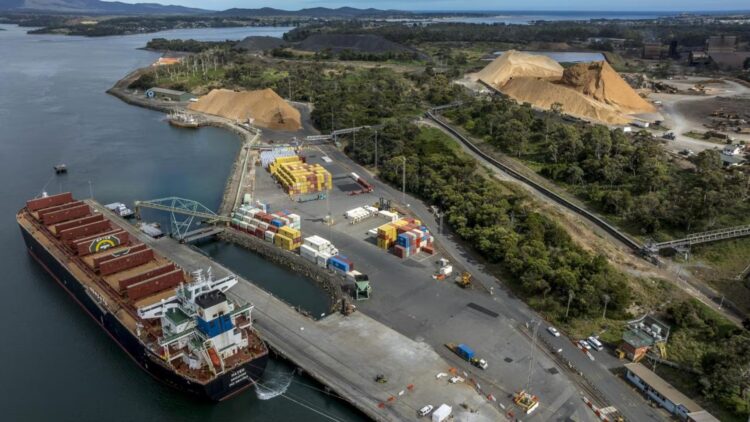
Tasmania is a small island, but it has something truly special — it runs almost entirely on renewable energy. Most of its power comes from wind and water, making it one of the greenest places on Earth. On top of that, it has a deep-water port and sits close to major Asian markets, which makes it the perfect spot to export clean energy to the world.
In recent years, several projects in northern Tasmania have tried to produce green hydrogen, but many of them struggled. The main problems were technical difficulties and a lack of the right infrastructure to make large-scale production work.
Now, a company called ABEL Energy has come up with a new, simpler idea. Instead of trying to export hydrogen directly — which is complicated and expensive — why not transform it into something easier to handle and more useful?
From hydrogen to green methanol
ABEL Energy, together with the company Worley, is developing the Bell Bay Powerfuels project, which plans to transform hydrogen into green methanol.
So, what exactly is green methanol? It’s a clean liquid fuel made by combining green hydrogen with carbon captured from sustainable biomass. The result is a fuel with a neutral carbon footprint, meaning it doesn’t add pollution to the atmosphere. Green methanol can be used as:
- A clean fuel for ships.
- A base for producing green chemicals.
- Or even as a sustainable aviation fuel.
The Bell Bay Powerfuels project is expected to begin operations in 2028, aiming to produce around 300,000 tons of green methanol each year. It has already secured A$330 million in government funding, drawn interest from international investors, and may soon be acquired by Zen Energy, a company backed by economist Ross Garnaut.
Many experts now think that green methanol could soon overtake hydrogen as one of the most practical and effective clean fuels available in the world today.
Why this is happening now
Tasmania offers all the right ingredients for projects like this to succeed. The island has:
- An almost fully renewable energy grid.
- A deep-water port ideal for exports.
- A strategic location close to Asia.
- And a government strongly committed to the energy transition.
In addition, major infrastructure projects are underway to support clean energy development — such as a 224 MW wind farm in Bell Bay, and the Marinus Link, an underwater cable that will connect Tasmania to mainland Australia’s electricity market.
Together, these projects are turning Tasmania into a global hub for renewable energy.
A turning point for hydrogen
Even though hydrogen remains a key part of the clean energy transition, green methanol appears to be a more practical option for many industries. Being a liquid, it is much easier to store, transport, and use than pure hydrogen, which needs special tanks and extremely low temperatures.
For that reason, some experts say that the future of clean energy could lie in green methanol, while hydrogen remains a crucial ingredient in its production.
A cleaner, more realistic future
ABEL Energy’s project shows that the shift to clean energy is no longer a distant dream — it’s already happening. With its renewable energy, ideal location, and strong environmental policies, Tasmania is leading the way toward a new kind of energy economy.
If everything goes as planned, in just a few years we could see hydrogen giving rise to green methanol — a cleaner, safer, and more flexible fuel capable of powering ships, planes, and industries without harming the planet.