
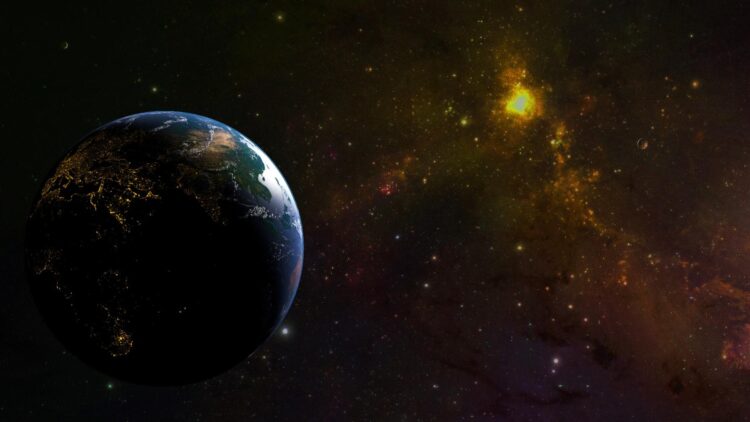
NASA warns about a possible ‘’event of technological darkness’’. Imagine one day when GPS stops working, lights start to flicker, satellites no longer send data, and suddenly technology doesn’t work. What a chaos, right? This is not science-fiction, but a possible scenario NASA is warning that could happen in 2026.
The U.S. space agency has talked about what’s called an ‘’event of technological darkness’’, a phenomenon that could leave our planet temporarily without most of its technology. Even though it would only last a short amount of time, the impact could be felt in the entire world. So, let’s learn more about this upcoming 2026 event.
What’s an event of technological darkness?
According to NASA, this event would happen if a strong solar storm interrupts the technological systems on Earth. These storms are born in the Sun, which sometimes releases huge explosions of energy called solar flares and coronal mass ejections. So, when this happens, charged particles and radiation go very fast through space and can hit the Earth.
If the storm is intense enough, it can affect satellites, electric networks, and communications making failures in many systems that we use everyday. This is why NASA will study this phenomenon with a mission called SunRISE to investigate the Sun’s magnetic field and analyze radio waves from its outer atmosphere. The goal? To understand how these storms are formed and hot to protect technology before it’s too late.
The Carrington event
We don’t know if you know, but these types of phenomena are not something new. In 1859, a huge solar storm known as the Carrington Event affected the telegraph systems of the time and, in a matter of hours, the telegraph lines stopped working and the sky lit up with colorful auroras seen far from the polar regions.
That was clear evidence of the incredible strength of the Sun and, even though at that time technology was minimal, the harm was noticeable. If something like this ever happened again today, the impact would be way more serious since our ñife would completely depend on technology: internet, energy, transport, communication, medicine, and finance. Basically, it could disconnect us from the digital world for hours or even days, proving how fragile our technological civilization is.
How would a huge strom affect us?
An event like this could have effects in almost every aspect of our modern life:
- Satellites could stop transmitting signals, affecting communication, TV, and internet services.
- GPS systems could fail, making it difficult for airplanes, ships, and cars to navigate.
- Power grids could shut down, leading to widespread blackouts.
At first, it would seem like a small problem, but in a short time the chaos could expand, as we mentioned before: financial systems would stop working, health services would be interrupted, and commerce would stop. For NASA, this type of event would be a very serious warning about how we totally depend on technology and the importance of preparing for natural risks.
How it would be seen from space
Astronauts and satellites that orbit Earth would have a privileged view of the phenomenon. From space, it could be seen the bright solar flares and eruptions of energy bursting from the Sun and traveling toward Earth.
Thanks to instruments of observation, NASA can detect solar storms in real time and study their behaviors before they affect our planet. This information is key because it allows scientists to take precautions to protect satellites, electric systems, and communication networks.
So, what seems just a spectacular image of the Sun in action could actually be an early sign of alarm that could help keep our planet connected and safe.
How NASA prepares for this threat
We don’t know for sure when or how strong the next solar storm will be, but NASA is already working on it. The agency is constantly investigating the Sun’s behavior, its magnetic field, and the solar flares that could alter life on Earth.
Missions like SunRISE will allow scientists to obtain more precise data to protect technology we daily use. So, these studies are essential to give time to governments and companies to react and avoid serious damages.