
Sometimes, the most incredible discoveries don’t happen in laboratories, but in the most unexpected places… maybe in the backyard. This is the story of Hugo, an 8-year-old boy whose curiosity has sparked a revolution in the study of ants and their relationship with wasps. That’s right, we’re not making anything up, this boy’s curiosity has made hundreds of scientists rethink the ideas they’ve had about ants for years. Stay tuned and we’ll tell you what this boy has discovered!
How an 8-year-old boy changes science
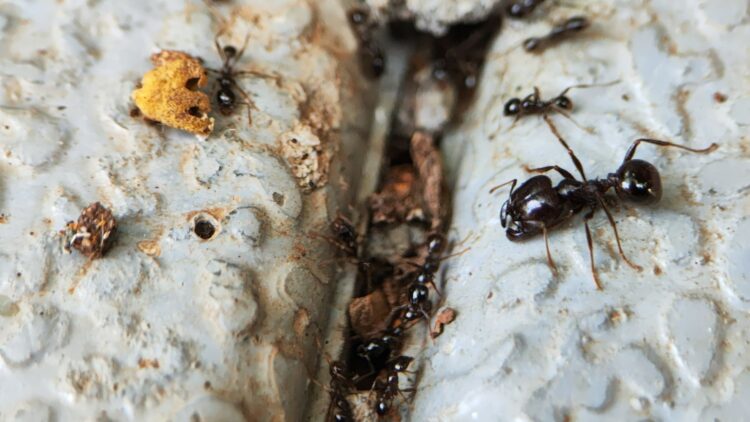
Hugo, the protagonist of this story, was in his yard quietly watching a group of ants carrying small pieces of food (that looked like seeds) with the goal of taking it to the anthill. With the curiosity of an 8-year-old boy, he called his father, Andrew Deans, a professor of entomology (the science that studies insects) at Pennsylvania State University. It was then that they both stopped to observe the scene when they realized that they were not carrying seeds, but oak galls. Structures that some wasps produce to protect their larvae. Why were the ants collecting these? They were both baffled and amazed.
Why were the ants doing this?
Galls are small structures that wasps create on trees so that their offspring can nest in safe places. These galls are covered in fatty acids, a substance that is also found in some seeds and that is irresistible to ants. Thus, when ants collect these galls, they consume the fatty part but leave intact the structure where the wasps hide their larvae, so that a “deception” occurs: the ants believe that they have found good food but they are only helping the wasp larvae to remain protected (following their plan as it is).
The gall trick
We already know that nature is amazing, but these galls can imitate the smell of dead insects, which is the favourite of ants. John Tooker, professor at the University of Pennsylvania, who pointed out that wasps have developed this system to manipulate ants through chemicals, and it works perfectly!
What does this discovery tell us?
Andrew Deans sums it up with a reflection: this discovery opens a new chapter on how much we do not know about ecosystems and how important it is to preserve biodiversity and take care of our planet, even more so now when climate change is causing the loss of many habitats.
The most striking thing about this story is that it started with a boy who simply paid attention to a group of ants. Hugo is not an expert by any means, nor was he looking for answers, he was just observing a group of ants in his yard one afternoon. But how important is the curiosity that managed to trigger a discovery that scientists are now studying closely.
This little boy has taught us that science is everywhere and that even the smallest moments can change the perspective of what we know today. How many secrets are still waiting to be discovered?!
If you want to know more about Hugo’s discovery, you can click here!