
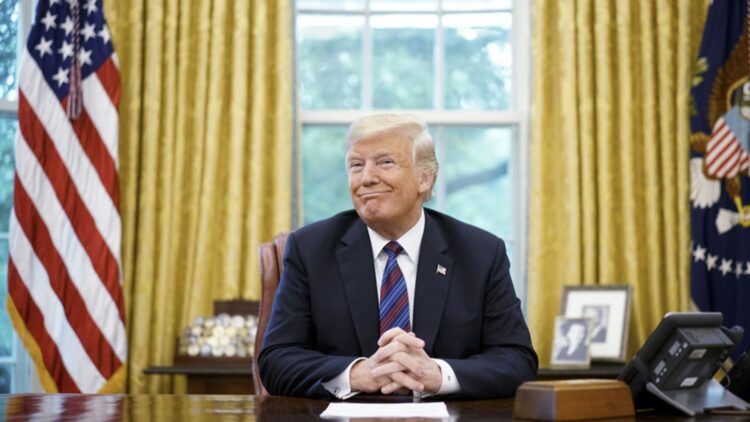
Donald Trump, the President of the U.S., has proposed (once again) the idea of sending direct stimulus checks to American paytaxers. However, this time there’s an important difference: instead of using government debt or printing more money, the plan would be funded entirely by import tariffs — taxes that the U.S. collects from goods entering the country.
The proposal was made at the beginning of October of 2025, and the idea is to send payments between $1,000 and $2,000 per person. Trump presents it as a ‘’national program of dividends’’, meaning the money collected from tariffs would be given back directly to the American people.
This idea is part of Trump’s popular agenda ‘’America First’’, which aims to protect local industries, strengthen the national economy, and reduce dependency of the country to other markets. So, let’s learn more about the proposal.
How stimulus checks would work
The idea proposes that each paytaxer receives between $1,000 and $2,000, and the money would come from tariffs on imported products from countries like China and Mexico. Tariffs are taxes that the government charges on foreign goods entering the U.S. For example, when an American company buys materials or products from another country, it has to pay a tax to bring them into the U.S. The government then collects that money.
Trump’s idea is to use those funds — instead of borrowing or creating new debt — to send checks to American households. Unlike the stimulus payments during the COVID-19 pandemic, this version would not rely on government loans or increase inflation through new spending.
According to Republican projections, this program could inject up to $500 billion into the economy if Congress approves it. Supporters say it would help families, increase consumer spending, and provide relief in a time of moderate economic growth and continuing inflation.
Money
The U.S. Treasury Department reported that established tariffs since July have collected more than $80 billion, which is enough to cover a first round of payments for about 150 millions of paytaxers.
What’s more, it’s estimated that a 10% general tariff to imports could generate $200 billion per year, which would allow it to fund 2 rounds of stimulus checks.
However, the success of the stimulus check plan would depend on the reaction of other countries. Some nations affected by U.S. tariffs — especially China and Mexico — have already threatened to retaliate, which could lead to trade tensions and make imported goods more expensive.
Economic risks
Even though the idea of receiving a $2,000 stimulus check sounds great, several economists warn about potential risks of this. According to experts, tariffs could generate an increase of between 0.5% and 1% which would reduce the real value of the stimulus checks. Basically, people could receive money but at the same time they would have to pay more for food, technology, and other products.
Political reactions
The proposal has made people have good and positive opinions about it. On social media, many conservative influencers have praised it and described it as a ‘’tax giveaway at no cost to the taxpayer’’ since the money would come from taxes to other countries.
On the other hand, democrat leaders, like Nancy Pelosi, have criticized an initiative because (for them) it’s an ‘’election gimmick’’ to gain more votes. Pelosi also warned about the fact that the plan could leave out citizens without bank accounts, who couldn’t receive direct deposits.
Now the future of the stimulus checks plan depends on the Senate, which is currently controlled by the Republican party. So, if the budget amendment is approved in the coming weeks, the IRS could start sending direct deposits as early as November of this year.