
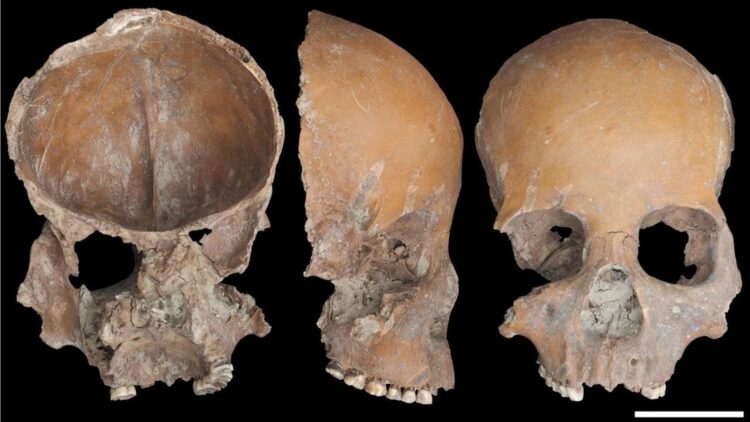
Archaeologists have found… human bones!! About 5,000 years ago, in the ancient city of Liangzhu, citizens transformed human bones into objects like: masks, bowls, and tools. This changes the way in which we understand ancient societies’ concepts about death and the human body.
Liangzhu was one of the first urban civilizations of the Asian east, located in the Yangtze River Delta. The city had advanced farming, temples, jade artifacts, and complex water systems, showing it was a highly organized society. However, this discovery shows a darker side: humans modified human bones to create objects, but we don’t know yet the purpose behind this. So, let’s learn more about this finding, shall we?
Finding human bones
The study, published in Scientific Reports, was led by Junmer Sawada and an international team of researchers. Even though in other parts of the world human bones had already been used as tools or in rituals, in China this hadn’t been recorded before. So, the sudden discovery of this in Liangzhu shocked archaeologists and made them rethink how this society understood death, the body, and identity.
The bones were found in channels and pits in the city, mixed with broken pottery and animal remains.They weren’t under the ground and most of them showed signs of deliberately modification like cuts, holes, polishing, and intentional fractures.
Out of 183 examined bones, 52 were clearly worked: some were skulls turned into bowls or plates, others into masks. Mandibles (jawbones) were flattened, and long bones were worked on at the ends, possibly as tools. Surprisingly, nearly 80% of the bones were unfinished, left incomplete or discarded, unlike other ancient cultures where human bones were carefully finished and respected.
Not traditional burial practices
Before Liangzhu, Neolithic societies in the Yangtze Delta (such as Hemudu or Majiabang) buried the dead bodies in well organized tombs. But Liangzhu broke with that tradition since, in a city with thousands of citizens, many dead people were unknown for the living. This led to a deshumanization of the bodies and treating them like a usable material, not like sacred relics.
Researchers believe the human bones were collected after the natural decomposition, processed like animal bones, and used without a clear or symbolic meaning. There was no evidence of violence, sacrifices, nor immediate dismemberment.
Human bones like…
Some of the pieces, like bowls made out of skulls, could have had a ritual function because they were found in high-status tombs. However, masks or flattened jawbones don’t have clear parallels in ancient China, these objects may have been practical tools or unfinished items, not sacred artifacts.
How long did this practice last?
This practice lasted about 200 years, between 4,800 and 4,600 years ago, during the peak of Liangzhu. The social transformation caused by urban growth, complex administration, and class divisions could have influenced how they treated the dead bodies. People of low status or outsiders may have been treated as anonymous resources, rather than ancestors.
After this period, the practice completely disappeared, so it seems to be a unique cultural experiment that started at a very specific moment in urban history.
Liangzhu and death
So, now that we know more about this human bones finding, we can think about a few things:
- When do we stop recognizing dead bodies as part of our community?
- How does urbanization change the way we treat human bodies?
- Can a complex society transform ancient ideas about life, death, and memory?
What we know is that Liangzhu society valued utility over ancestral respect. Isn’t it crazy to think about using a skull as a bowl? That would be impossible to picture nowadays.