
A group of Australian scientists has created two new building materials made from rammed earth and recycled cardboard or carbon fiber tubes, almost like an episode of Art Attack, but resulting in strong, lightweight, and much more eco-friendly structures than traditional cement.
Cement and conventional concrete generate almost 8% of global CO₂ emissions. So if someone finds a way to build without depending on them, we’re talking about potentially changing the planet.
Mixing the old and the new
The team from RMIT University was looking for something different, to build without cement and without wasting resources. They combined compacted earth (the old) with recycled materials, and voilà.
They created two versions:
One uses recycled cardboard tubes, ideal for sustainable and low-cost projects.
The other, with carbon fiber tubes, achieves strength similar to high-density concrete but with much less weight.
In other words, with materials anyone could have on hand (earth, cardboard, water…), they’ve managed to create something that can compete with one of the pillars of modern industry.
How the trick works
When you compact earth inside a tube (whether cardboard or fiber), you prevent it from expanding sideways. That extra “pressure” gives it impressive rigidity. This type of structure retains the natural thermal properties of earth, helping to keep interiors cool in summer and warm in winter, that sounds like less energy use, right?
Basically, it’s a modern version of adobe houses, but optimized with 21st-century materials.
The power of recycled cardboard
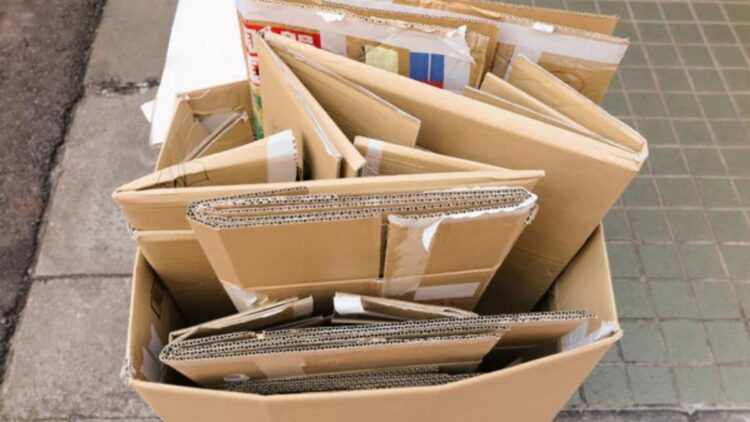
The most surprising discovery was the cardboard-confined rammed earth, cardboard tubes that act as both mold and structural support. Strong, recyclable columns and walls with a carbon footprint up to 80% lower than concrete.
In Australia alone, more than two million tons of cardboard are thrown away every year. So reusing that material not only reduces emissions but turns waste into a resource, like we said, almost like Art Attack!
The carbon fiber
The second material goes one step further: rammed earth inside carbon fiber tubes.
Yes, the same material used in airplanes, electric cars, and even satellites. The result is extremely strong structures, capable of withstanding loads similar to reinforced concrete, perfect for seismic areas or modular constructions that need to combine strength and flexibility!
Building with what’s available
Beyond the technology, what lies behind this project is a philosophy of local construction. Instead of transporting tons of cement or steel, builders can use the earth from the site itself and recycled materials already available in the area.
This not only reduces environmental impact but also lowers costs and brings sustainability closer to rural or remote communities. And there’s an extra benefit: rammed earth walls have high thermal inertia, meaning they maintain a more stable indoor temperature.
From laboratories to the real world
For now, all this is still in the experimental phase. Researchers continue testing how these materials respond to humidity, aging, and temperature changes. But they are already in contact with construction companies interested in trying them out in real projects, so we might be witnessing a true revolution in sustainable architecture.
If everything goes as expected, this could be the start of a new era in eco-friendly construction.
“From earth and cardboard, a new generation of green buildings could emerge”.
Maybe in a few years, when we look at a building, we won’t think of cement or steel… but of soil from the ground itself and recycled boxes that somehow became a home.