
Have you ever been aware of the immensity of the universe? Have you ever been lying on your back on a green grass at night looking at the stars and thinking “how small we are” or “who else is up there?” How big is the universe? Now, with telescope technology, astronomers have discovered something that does not fit with our conception of the universe, and we are going to tell you what they have discovered. A new series of discoveries about our galaxy is opening up before us, isn’t it incredible?!
What is the Hubble Voltage?
Apparently, scientists have tried to calculate the speed at which the universe moves using two different methods and have obtained different results, that is, the calculations that have come out of each method have been different.
Adam Riess, professor of physics and astronomy at Johns Hopkins University, is excited by the fact that we have misunderstood the universe until now, and what methods were used to measure the universe back then?:
The first method is called “Big Bang Echo” which is the first study of the microwave background radiation (CMB), basically it is like the fingerprint of the Big Bang. With this method, the resulting data is that the universe is expanding at a speed of 67 km/s/Mpc
The second method, called Cephaid Stars, uses these stars (called Cephaid variables) because they act as lights, that is, their brightness helps calculate distances and the speed at which the universe is expanding, and according to this method, it is expanding at 74 km/s/Mpc
As you can understand, the difference between the two data is very large and is giving astronomers at the European Space Agency a headache.
Nobel Prize winner David Gross confessed in a 2019 conference at the Kavli Institute for Theoretical Physics (KITP) that it is not a problem or a tension, but a crisis.
What is the James Webb Telescope?
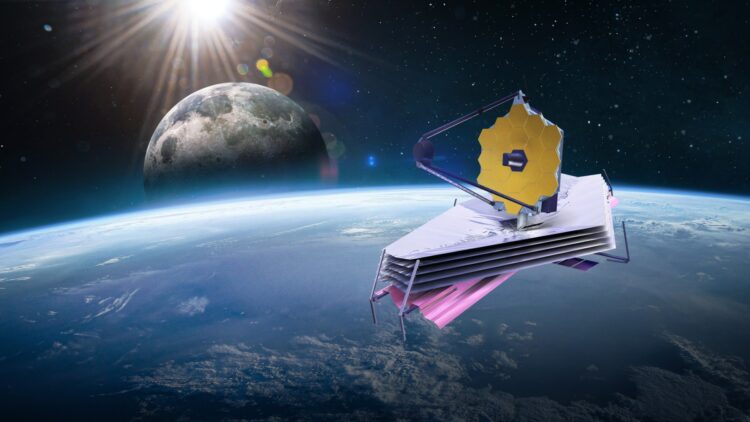
Created in 2021, it is the most advanced space observatory we have on our planet. This telescope is designed to capture infrared light, so it allows us to observe objects that are very far away from us, and also very old (you already know that distances in the universe are understood in light years), such as the first galaxies that formed after the Big Bang.
What has this telescope discovered?
In 2023, this telescope went into action and confirmed that the measurements made by Hubble (the most advanced telescope available at that time) were correct. Adam Riess’ team ruled out measurement errors and confirmed that, indeed, we were not understanding the universe well.
What could be causing this discrepancy?
The truth is that scientists are still not sure, perhaps because of unknown particles, variable dark energy or because there are dimensions beyond those that humans can perceive. Still, there are dozens of theories about this, but there is still no answer.
This “tension” is not a problem, but rather it has been a revolution in our way of understanding the cosmos. David Gross confirmed that what we are experiencing is a great opportunity to discover more things about this mantle in which our small planet is found.
The future of astronomy is now promising, and thanks to the creation of telescopes such as the James Webb, new doors are opening in science. How much we still have to learn!