
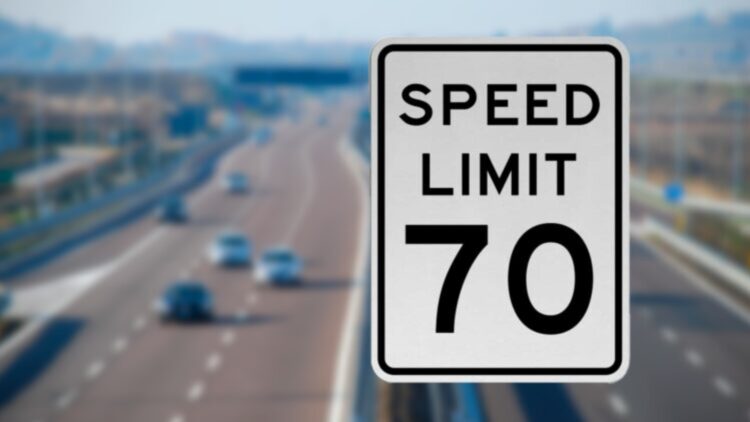
Drivers! This is for you because there’s a new change: a state speed limit of 70 miles per hour (mph). This means you could legally drive faster than on certain highways. The thing is that most of the time, when we talk about modifying speed limits, speed is reduced to avoid accidents. However, this time, lawmakers are thinking about increasing it because they believe that sometimes driving faster could make roads safer and improve the traffic flow. So, let’s learn more information about this.
Why speed limits matter
Speed limits exist because they protect us all: drivers, passengers, cyclists, and pedestrians. The faster you drive, the harder it is to react to an unexpected situation and avoid an accident. This is why states tend to reduce the limits and increase fines when there are many car crashes.
According to the National Highway Traffic Safety Administration (NHTSA), exceeding the speed limit was responsible for about one-third of all the deaths caused by traffic accidents in 2023. Therefore, many states have started to strengthen penalties and apply higher fines to those who drive faster than it’s established by the limit.
For example, in Florida a new law was passed in July of last year and established that anyone driving 50 mph over the speed limit could receive a $500 fine and even go to jail for 30 days. What’s more, some dangerous behaviors while driving are now considered felonies, which implies more serious legal consequences.
What does the new 20 mph limit bring?
The new idea comes from New York, where the debate is about a proposal called Senate Bill S1500. This aims to increase the speed limit on the main highways of the state, going from 65 mph to 70 mph. Generally, speed changes tend to reduce it, but New York lawmakers think that increasing it is safer.
They defended that modern vehicles are much safer than before: they have better brakes, reinforced structures, lane departure alerts, and automatic braking. This is why many drivers already drive almost at 70 mph in a natural way.
So, these lawmakers believe that with a higher and uniform speed limit every driver could drive in a more constant and safer way.
How speed limits work in different states
Every state of the U.S. decides their own speed limits, depending on the type of road, traffic, and density of the population. For example, states like Texas and Utah, with wide open highways have higher limits whereas urban areas have lower ones.
If New York passes the 70 mph speed limit, it will join other states that allow this limit on their main highways. The bill is still being reviewed by the Senate Committee, but if it passes, drivers across the state will see new speed limit signs rolled out over time.
Other changes on traffic laws
While New York studies increasing the speed limit, other states are implementing stricter laws before the holiday season, when there are more traffic accidents. In Florida a new law prohibits installing flashing red, blue, or white lights at the front of cars. Why? Because these lights are exclusively used by the police, ambulances, and other emergency services. If you don’t follow this, you could face a fine of up to $5,000, a third-degree felony, and even five years in jail.
So, this new speed limit in New York shows that safety is not always about driving slower, but understanding how people really drive nowadays and how modern vehicles can respond to it. Next time you see a speed limit sign, remember it’s more than a number, it’s thought to protect lives.