
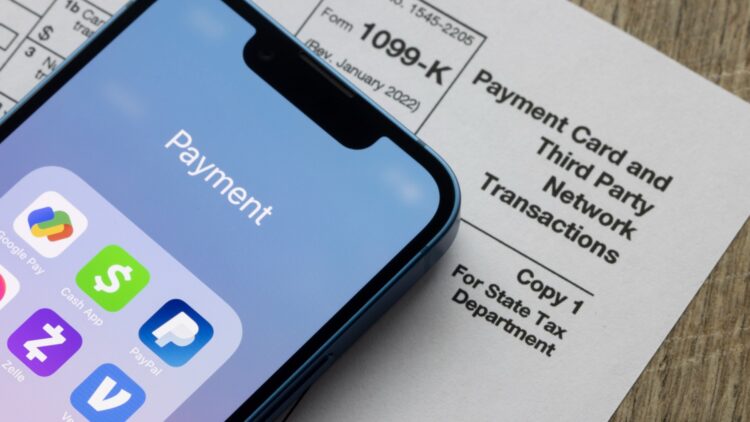
If you use PayPal or Etsy, you should know this. The Internal Revenue Service (IRS) announced an important change that will make the tax season easier for many people who use PayPal or other payment apps. Starting with the 2026 tax year, the IRS is bringing back the $20,000 rule, which affects when people receive the 1099-K tax form. So, let’s talk a bit more about this.
The 1099-K form
This is a document that the IRS uses to register how much money someone or a business earns when selling products or services at digital platforms or payment apps. This includes very popular services like PayPal, Venmo, Etsy, eBay, and others.
For example, if you sell handcrafted products on Etsy, or if you receive payments for tutoring or small jobs through PayPal, this form shows how much money you earned during the year.
The goal of this is that the IRS can properly track every income.
The previous rule
In the last couple of years, the IRS lowered the threshold for when this form had to be sent. The rule said that companies had to issue a 1099-K if a person earned more than $600 in total payments in one year. This applied even if it was just from one or two small transactions.
The change created a lot of confusion, mostly among those who only made small sales or used PayPal or Venmo occasionally. Many felt overwhelmed because they suddenly had to deal with extra tax forms, even if they weren’t running a business.
Back to the $20,000 rule
To make things easier, the IRS decided to bring back the old limit. From next year, digital platforms like PayPal or Etsy will only send the 1099-K form if 2 requirements are not followed:
- You made more than $20,000 in total payments during the year, and
- You had more than 200 transactions.
This means that small sellers and casual users will no longer receive the form unless they are doing a significant amount of business.
What this means for PayPal users
This is great news for PayPal users because they will no longer receive tax forms for small personal transactions or casual sales. However, there’s something we should remember: even though you don’t receive the form, you must report all your income to the IRS.
Other tax changes for next year
The IRS also announced new measures that could benefit paytaxers. Under what’s being called Trump’s “One, Big, Beautiful Bill”, some types of income will no longer be taxed at the federal level — such as tips, overtime pay, and car loans. These deductions will appear in a new section of the tax form called Schedule 1-A: additional deductions. This will work the following way:
- You can deduct up to $25,000 in tips.
- You can deduct up to $12,500 in overtime pay if you file taxes alone, or $25,000 if you file jointly with a spouse.
- For car loans, you can deduct up to $10,000, or the total interest you paid (whichever is smaller).
However, these deductions lower or disappear if the annual income is very high:
- They phase out after $150,000 for single filers.
- And $300,000 for married couples filing together.
- For car loans, the limit starts to fade after $100,000 for singles and $200,000 for couples.
It’s also important to know that, although these deductions apply at the federal level, states may still tax tips or other income differently.
How people plan to use their tax refunds
A recent study by Talker Research, conducted with TaxSlayer, shows that many Americans plan their tax refund spending months in advance. Out of 2,000 people surveyed:
- 79% expect to receive a refund this year.
- 52% say their refund is an important part of their budget.
- 77% plan to use it on essentials, such as:
- Rent (52%)
- Groceries and basic items (44%)
- Credit card debt (37%)
More than half of those paying off debt are targeting holiday expenses. Meanwhile, 8% said they’ll spend their refund on luxuries, like:
- New clothes (37%)
- Entertainment (28%)
- New phones (26%)
On average, people hope to receive about $1,700 in refunds this year.
So, with new deductions on tips, overtime, and car loans, plus better refund planning, the 2026 tax season could be easier and more manageable for millions of Americans.