
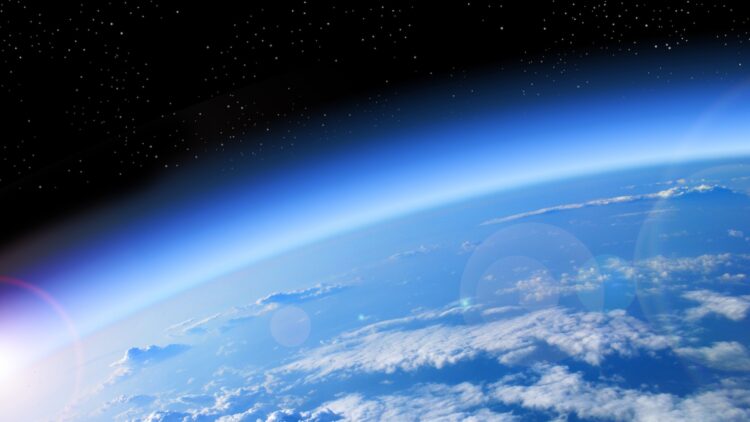
Did you know there’s a technique to darken a bit the Sun called artificial cooling? This is to try to stop global warming and the plan is to spray small particles in the highest point of the atmosphere to reflect part of the sunlight toward space. By doing this, the sunlight hitting the Earth would be less and, therefore, the planet would heat less too.
However, a new study by the University of Columbia, led by scientist Miranda Hack and atmospheric chemist V. Faye McNeill, warns this method is not safe nor practical. Even though the theory sounds good, it could cause more problems than solutions. So, let’s see what artificial cooling is in detail.
The origin of artificial cooling
This idea is based on something that already happens in nature: when a huge volcano erupts, releases tons of ashes and dust toward the air and they remain in the atmosphere. These particles reflect part of the sunlight and, during some time, the planet slightly cools. This made scientists think: if volcanoes can cool Earth in a natural way, maybe humans could do the same effect to reduce global warming.
In computer models, this type of artificial cooling seems to work, but, as explained by researchers, models don’t reflect precisely what would happen in real life. So, let’s see why this method is a bad idea.
1. Models don’t show the reality
In models, researchers can use perfect particles of the perfect size and put them right where they want to. However, the real world is way more complex and the particles could behave in an unexpected way, group themselves, or fall before it was planned. All of these possibilities would reduce the cooling effect.
2. Difficult to coordinate
For artificial cooling to work, the entire world had to work together. Scientists say the ideal thing would be to have just one global government that controls where, when, and how these particles are released. But this is almost impossible in practice because countries have different interests and it’s very difficult for all of them to cooperate.
If each nation decides to do it on their own, the result would be an unbalanced cooling with some parts colder and others warmer, which would make unpredictable changes on the climate.
3. Lack of accurate materials
Another issue is the type of material that would be used for the artificial cooling. Some of the most efficient, like diamond or zircon dust, are too expensive or rare. Even the most common materials like lime or sulfur would require massive amounts every year, so much that global supply chains could be strained.
What’s more, when these particles are very tiny (as it’s required for this method) they tend to join among them, making groups that reduce the capacity of cooling.
4. Risks for the atmosphere
Spraying particles in the air could alter the climate patterns and affect far way areas like the poles. Also, it could damage the ozone layer, which protects us from harmful ultraviolet radiation. And if the process ever stopped suddenly, the Earth could heat up very quickly, even faster than before which is a dangerous “rebound effect.”
So, are we ready for artificial cooling?
The method seems interesting, but trying to control the planet’s climate could lead to so many issues and we don’t have the technology, the organization, nor the certainty yet to do it without serious consequences. So, the best thing to do would be to look for other alternatives that are closer to reality since, according to the study, this would be a little practical and very risky strategy.