
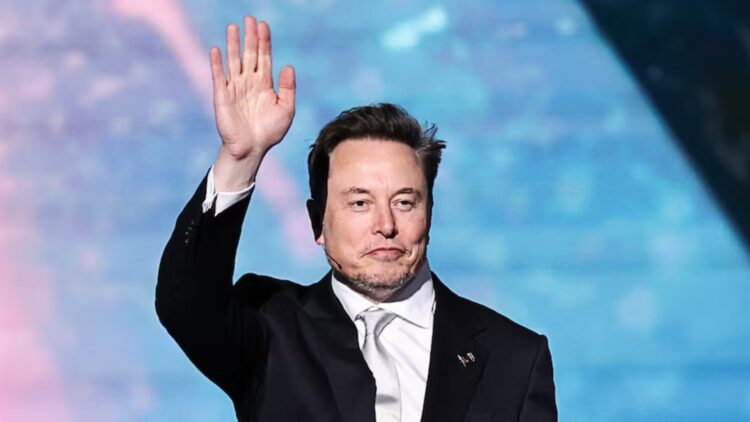
During Tesla’s third-quarter 2025 earnings call, Elon Musk, the CEO of Tesla, surprised everyone with an idea that sounds straight out of science fiction. Apart from talking about producing millions of robotaxis and selling 3 millions of cars per year, Musk commented something very curious: his Tesla vehicles are ‘’too smart to be just cars’’ and, according to him, they get bored when they are not used.
His idea is unusual but very creative. He wants to link all Tesla cars together to form a large artificial intelligence network. In this system, each car would function like a small computer. When millions of cars are connected together, they could form a giant supercomputer that moves around. So, instead of staying parked and unused, the cars could work together to process information and help make AI smarter. Now, let’s take a closer look at how Elon Musk imagines this idea working.
‘’Bored’’ cars could become a computing powerhouse
Musk explained that if all the ‘’bored and underused’’ cars were connected, they could generate a huge network of data and resources. His calculus suggests that with 100 million connected cars, each contributing roughly 1 kilowatt of processing power, the network could reach 100 gigawatts of distributed computing, including energy and cooling needs.
This concept is not completely new since projects like SETI@Home and Folding@Home have already used idle personal computers to search for extraterrestrial life or study diseases. However, the new thing about Elon Musk’s idea is that vehicles in movement would be used to train artificial intelligence, which is something that has never been done on this scale.
Challenges
Even though Elon Musk’s proposal is exciting and sounds like a major step toward a futuristic world, the reality behind it is much more complicated.
There are several challenges that would need to be solved before something like this could actually work: Tesla has sold 7.5 million cars in total, which is far below the 100 million cars needed to make this network possible. Using the cars as mini-computers could use up battery power faster, damage the car’s hardware over time, and might require paying car owners for letting their cars be used this way.
In theory, the idea is possible, but in practice… There are many technical and logistic challenges that must be solved before a network of Tesla vehicles can function as a mobile data center.
Still, ideas like this show how Elon Musk imagines a future where technology and vehicles are connected in such ways we could have never imagined. In his mind, cars could be used for more than transportation, they could have a much larger role in everyday life. In his view, cars could become tools that help run powerful computer systems, support the training of artificial intelligence, and contribute to large technology networks around the world.
Elon Musk and imagination
He has always been known for proposing ideas that seem taken out of a science fiction movie: from his plans with Tesla and SpaceX to projects like Starlink and Neuralink. Musk combines innovation and ambition, and his idea of transforming Tesla vehicles into an artificial intelligence network shows how creativity and technology can cross unexpected limits. A car may not just be a vehicle in the future, it might also be something that works silently in the background, helping to improve artificial intelligence or support new technology. Even if this idea never actually happens, it shows that new inventions often begin with brave and unusual ideas.
Elon Musk’s vision reminds us that progress begins when someone is willing to ask, “What if?” Do you think Elon’s ideas and projects are positive for the future?