
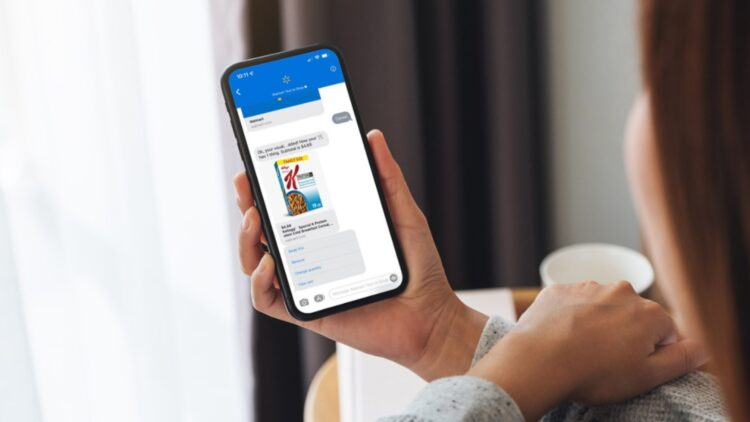
We always say that artificial intelligence is flooding everything, but beyond answering the questions you do not want to ask anyone out loud or solving your child’s school assignments, there is a sector that is also taking advantage of AI, the retail sector.
Walmart, Amazon, Target, eBay, Lowe’s, Home Depot or Abercrombie are putting a lot of money into making it easier for customers to search, compare, buy and receive products, they want fast, personalized… and profitable purchases (for them, obviously).
AI in retail
Since tools like ChatGPT came out, we have not been the only ones using them, the big retail companies also realized that it could be a tool and not a toy, so they also started to move and added a virtual assistant on their websites that you can ask anything, solve doubts about a product, plan events or even buy through it without needing to enter the page.
So it is no longer just a chatbot, it is a salesperson, an advisor, and in some cases even a shopping cart. More than half of consumers say they plan to use these tools to find deals or compare prices, especially in high-spending moments (Hello, Christmas). So the question is not if AI is going to replace people, but how long it will take to become the main interface of online commerce.
Walmart presents Sparky
Walmart launched Sparky, which does everything, suggests products, helps you plan your party, summarizes your reviews and even organizes shopping lists.
For these holidays, they added 3D showrooms and audio descriptions, in addition to an agreement with OpenAI so you can buy from ChatGPT!!
Target integrates AI
Target is testing something similar with ChatGPT on its site, you will be able to find fresh products and choose what type of delivery you want from a conversation with the AI.
You can even upload a handwritten list so that it converts it into an automatic cart or ask it to suggest gifts if you still do not know what to get your father-in-law.
Amazon calls it Rufus
Amazon launched Rufus in 2024, an assistant inside its own store that answers you, recommends things and gives you personalized offers, it seemed like nobody would use it but 250 million people actively use Rufus for their purchases.
They want the customer to save time and money… And for you to buy without realizing it!
eBay and its own AI
eBay created an agent that accompanies you during the search and personalizes your shopping experience. In addition, they developed language models so that users can perform specific tasks through their AI.
Abercrombie
Abercrombie & Fitch partnered with PayPal so that you can explore products and buy from external conversational apps, like Perplexity.
The goal: be where people are, not wait for them to enter the website.
Lowe’s launches Mylow
Mylow gives you step by step instructions, design ideas and available products to carry out your remodel. It answers almost one million questions per month, so it helps all those people who are a bit lost with their designs.
Home Depot and Blueprint Takeoffs
Home Depot created a tool that converts blueprints into materials, costs and times, super useful for builders and professional remodelers who need to make quick estimates and not spend hours in front of Excel.
And do not worry, because they assure that their tool is fast and effective for professionals.
All this, as you can see, is showing that retail no longer depends only on having fast or attractive apps for the user, now there are conversations, assistants and many more things. Companies not only want to sell more, but reduce costs and build customer loyalty. What do you think about virtual assistants? Do you use them? Tell us!