
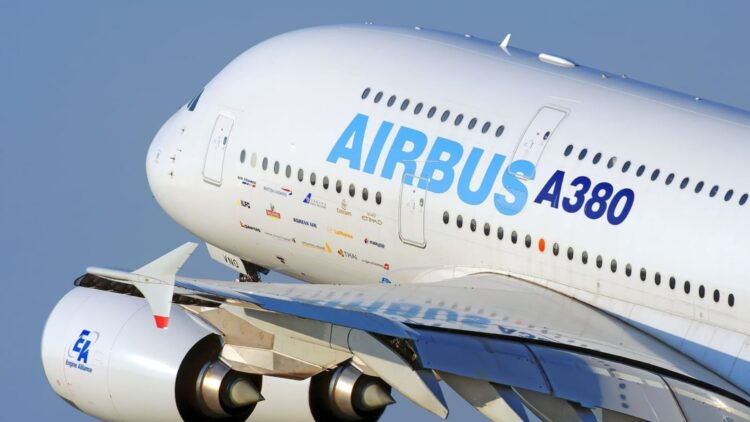
Hydrogen has flooded everything. Not literally, but it has positioned itself as the new favourite combustion method for practically all companies. Until now, we had seen cars and boats, but what if we told you that Airbus also wants to join the hydrogen-powered vehicle movement? It has now presented its new ZeroE aircraft, electric and powered by hydrogen fuel cells, a true milestone in the aerospace sector that aims to change the course of aviation by 2035. Is the world ready to see a zero-emission plane whose only byproduct is water? Let’s see.
What will this ZeroE from Airbus be like?
This plan will feature a single design and four engines, each powered by an independent hydrogen fuel cell. These cells will convert the stored hydrogen into electricity, eliminating the need for fossil fuels and reducing the carbon footprint to zero. Isn’t it incredible?
This model moves away from what we understand as (traditional) aircraft and opts for an electric propeller system. A performance never before seen in a commercial aircraft of its size.
Just like we’ve seen with cars, the only thing this type of combustion produces is water, and Airbus intends to carry out transatlantic flights with carbon-neutral emissions (as long as the hydrogen is produced with renewable energy, of course).
How did they arrive at this aircraft model?
One of the biggest challenges Airbus encountered was developing cells with the power and size sufficient to move a commercial aircraft, since these planes usually weigh between 230 and 300 tons and consume approximately 80 tons per trip…
To achieve this, Airbus created Aerostack, a joint venture with ElringKlinger. In 2023, they managed to surpass the most demanding technical tests, reaching 1.2 megawatts of power, a real madness for the sector!!
Thanks to these tests, they have managed to make the ZeroE propulsion system work and confirm that hydrogen can be a viable alternative for the future.
A union for Hydrogen
This plane, the ZeroE, is not just a plane and we know that. It is the heart of the Hydrogen Hubs at Airports program: an initiative started by Airbus to build a network of airport infrastructures capable of supplying hydrogen on a global scale, it may sound quite ambitious project, but, think about it for a moment: a full network of airports that can supply hydrogen to the planes, just like petrol stations but for airplanes.
But, ambitious or not, there are airports and energy companies that are preparing for these transitions. Delta, EasyJet, SAS, Wizz Air, Iberia, Air Nostrum, and Air New Zealand have already joined the program, and they are not just any companies, they are the most important ones… We are truly looking at the future of aviation!
When will the first flight take off?
Even though the initial goal was to have this aircraft operational by 2030, Airbus has announced that the first commercial flight could suffer a small delay, and it will probably take place in the middle of that decade (2035), of course, depending on the technological evolution achieved during this “experiment”
Of course, Airbus is working against the clock to ensure that all technical and logistical aspects will be ready by then: from the most extensive safety protocol to the availability of green hydrogen in international airports.
A global commitment to sustainability
Hydrogen is not new, it is emerging as the great substitute for fossil fuels, not only for four-wheeled vehicles but also to achieve sustainable aviation.
Now all that’s left is for governments and the private sector to support this change, because we already know it: the future must be clean, efficient, and globally accessible for anyone!
The ZeroE is not just a breakthrough for Airbus itself, it is the symbol of the change that aviation needs. The climate emergency is now, and hydrogen-based solutions open a real door to sustainable flights without sacrificing autonomy or efficiency. And you, what do you think about it? Let us know in the comments!