
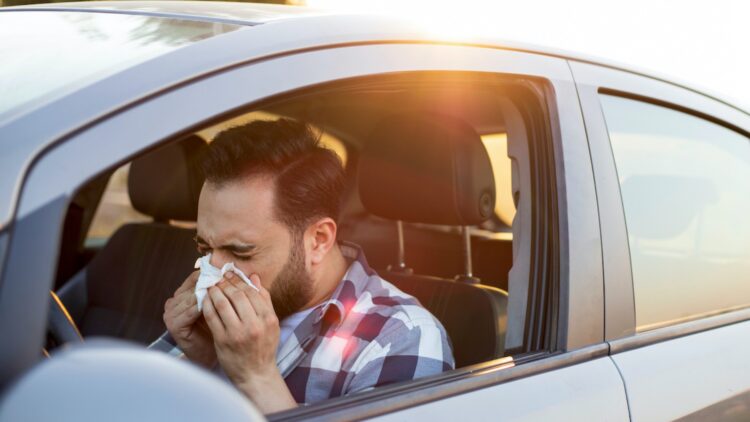
Spring, oh, spring. So beautiful, with its sunlight, warmth, longer days and… allergies. If you suffer from allergies, you know that spring means runny nose, sneezing, itching, nasal congestion, and sometimes, barely being able to open your eyes. The percentage of the population with allergies increases every year, and now… imagine having a flare-up while driving. Each sneeze could be a real risk. The good news is we’re going to show you how to create an allergen-free space inside your own car, step by step. Stick around and we’ll explain how.
Why is driving with allergies risky?
Mainly because roads are where the most pollen gets stirred up, and pollen gets in everywhere, you know that. It builds up in ventilation ducts, on the dashboard, and on the seats, and of course, allergies reduce your attention and focus. Some studies estimate that allergies can increase accident risk by up to 30%.
What about climate change?
Pollen seasons are expected to become longer and more intense (currently estimated at 1,000 grains/m³ of allergenic particles per day).
And the future doesn’t look better. Climate change will increase our exposure to allergens, and with shifting rainfall patterns, pollen seasons will get worse. Know what that means? If you’re allergic, you’ll struggle more. That’s why we need to prepare for the allergy apocalypse, both this season and in the future.
Step one: change the pollen filter
The pollen filter is a barrier between the outside and the inside of your car, and your lungs. It traps particles like pollen, mold, or dust, and keeps the air inside your vehicle cleaner for longer.
How often should it be replaced?
It’s recommended once a year or every 15,000 to 30,000 km. If you live in a high-pollen area, do it more often.
Upgrade your filters
HEPA (High Efficiency Particulate Air) filters capture up to 99.97% of particles, and activated carbon filters neutralize odours and volatile substances. Both are ideal for people with severe allergies.
Use air recirculation wisely
Activate the air recirculation function when driving through green areas, parks, or on high-pollen days. It prevents new particles from entering the cabin. But don’t keep it on all the time, it can increase interior humidity (encouraging mold growth), which isn’t great either. The best approach is to alternate between recirculated and fresh air, especially on long drives.
Vacuum and clean: your new spring routine
Use vacuum cleaners with HEPA filters to remove pollen from mats, seats, and the trunk. Wipe surfaces with a damp cloth and avoid products with strong fragrances.
According to RACE, a car parked outdoors with the windows open can turn into an allergy trap in just two days.
Control the environment to avoid mold and mites
Keep the temperature between 20 and 22 °C, and humidity under 60%. Cars with air quality sensors like those from Tesla or Volvo help maintain these conditions automatically.
Other tips
Wear sunglasses, consider FFP2 masks if you’re very sensitive, and check apps that track pollen levels in your area. Avoid driving early in the morning or at dusk, which is when pollen is most active in the air.
Smart systems to monitor air quality
Brands like Mercedes and Volvo already integrate ionizers, automatic sensors, and mobile apps that connect to the car to anticipate allergen entry and adjust the climate control system.
Driving with allergies doesn’t have to be torture, but it’s definitely a nuisance. Good luck, and hang in there through the season as best you can!