
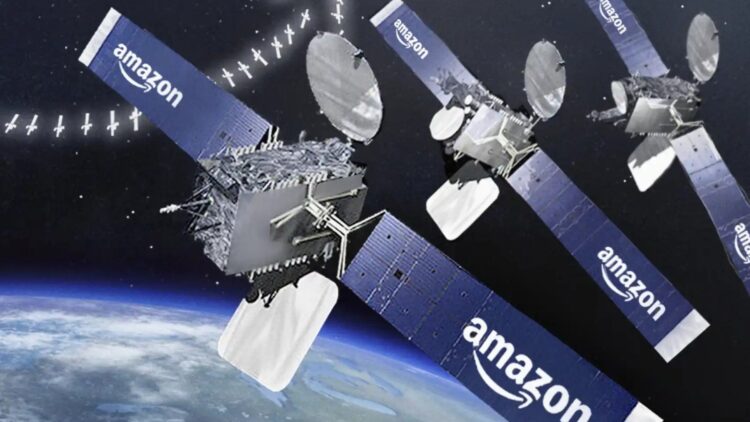
Amazon has its own satellite project. Beyond dominating the internet, it now wants to catch up with SpaceX and control space as well. A major feat, yes. It just doubled its Project Kuiper satellite constellation with the successful launch of 27 more devices into space, intensifying its direct competition with Starlink. The space race is getting interesting!
It’s called Atlas V and it took off from Florida early Monday, placing the new satellites into low Earth orbit, bringing the current Kuiper total to 54 units!! Although that number is still small compared to Starlink’s 7,500+ satellites, it marks a key step for the e-commerce giant in its ambition to offer global connectivity.
Mission: conquer space
The mission, named KA-02, marks a crucial moment in the Kuiper network deployment. It went off without a hitch and represents a significant step forward in a project that has been in development for over two years. This puts Amazon right in the satellite internet market and up against Elon Musk.
A successful launch
The launch took place from Cape Canaveral Space Force Station at 6:54 a.m. (local time) and was carried out by United Launch Alliance (ULA), Amazon’s key partner for this phase of the project. The company confirmed that once the launch phase was completed, control transferred to its operations centre in Redmond, Washington, where the startup of the new satellites is being monitored.
Although this was Kuiper’s second mission after the initial one in April (which also placed 27 satellites in orbit), it represents a turning point. Amazon plans to deploy up to 3,263 satellites in the coming years, and they’ve already taken the first step to do so, mission accomplished!!!!
Amazon vs Starlink: David vs Goliath
While Amazon has opted for a more gradual rollout, Starlink has surged ahead with a breakneck pace of launches. In just two years, the gap has widened considerably: 54 Kuiper satellites versus more than 7,500 from Starlink. Wow.
But Bezos isn’t giving up. With plans for up to 76 launch missions in the coming years, Amazon is confident it can catch up. For now, however, it has chosen to keep working with ULA instead of using rockets from its own company, Blue Origin, which has also slowed things down.
What’s at stake?
Beyond the corporate pride involved in launching over a thousand satellites into the stratosphere, this competition is about who will control the next big global infrastructure (drum roll): the space-based internet network! From remote regions to conflict zones, satellite connectivity promises to bring the internet where ground infrastructure can’t. And whoever controls that network will control part of the planet’s digital future. Now you get it, right?
What’s next for Project Kuiper?
Amazon hasn’t shared specific dates for its next launch, but some believe ground testing with the first users will begin in the coming months.
This move also opens new opportunities for its ecosystem of products: Alexa, AWS, and Prime Video. Amazon could integrate exclusive satellite-based services, further solidifying its presence in both the tech and entertainment sectors.
Global internet
Even though Project Kuiper is still in its infancy compared to Starlink’s orbital empire, progress is becoming visible! Amazon has shown that it’s serious and that, even if late to the game, it’s ready to play hard. So Musk, don’t get too comfortable, this race for global connectivity is heating up, and there’s a new player on the field: Bezos.
SpaceX vs. Blue Origin
| SpaceX | Blue Origin | |
| Founder | Elon Musk | Jeff Bezos |
| Founded | 2002 | 2000 |
| Mission | Colonize Mars, reduce space travel costs | Enable millions to live and work in space |
| Launch Frequency | High (over 90 launches in 2023) | Low (only a few launches per year) |
| Human Spaceflight | Regular missions via Crew Dragon (NASA + private) | Suborbital tourist flights with New Shepard |
| Orbital Capability | Yes (Falcon 9, Falcon Heavy, Starship) | Not yet (New Glenn under development) |
| Moon Missions | NASA’s Artemis program: Starship as Human Landing System | Lunar lander selected but not yet launched |
| Satellites Network | Starlink (internet constellation, >5,000 satellites) | Project Kuiper (in early deployment phase) |
| NASA Contracts | Multiple contracts (Commercial Crew, Artemis, etc.) | Selected for lunar cargo missions and Project Kuiper |
| Innovation Focus | Fast iteration, rapid testing, heavy launch payloads | Gradual development, emphasis on safety and reusability |
| Public Engagement | Very active, livestreams, social media presence | Less public-facing, quieter marketing strategy |