
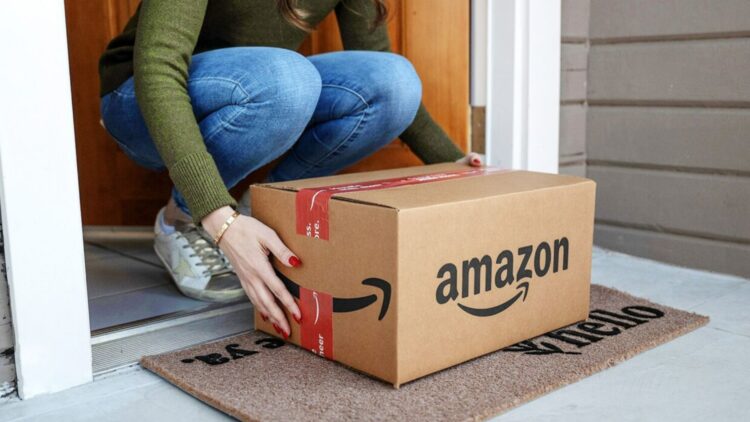
If you are one of those people who, as soon as you click the “buy” button, goes to the window to look for the delivery driver, Amazon has a surprise for you. They are testing 30 minute deliveries, not even Flash takes that little, in the time it takes you to take a shower, your order will be at your house. Very ambitious, 30 minutes is very little time, especially if you live in a city with a lot of traffic, not even a pizza takes that little.
This test is being tried in Philadelphia and Seattle, and the idea is that if you need something “now”, Amazon brings it to you before you even have time to blink. But obviously it is not magic, behind this there is a very large logistical structure that they have designed to work fast, small spaces, distributed around the city, orders that are small and an optimized preparation process so that the delivery driver can leave through the door in less than two minutes.
How much does it cost to order anything in half an hour?
Here comes the curious part. If you are not Prime, shipping costs 13.99 dollars per order, which is not exactly cheap if what you are buying is sliced bread or a couple of yogurts, maybe it is cheaper for you to go down to the supermarket yourself.
If you are a Prime member, the cost goes down to 3.99 dollars, thanks to a system of tiered fees that basically pushes you to use it more than once.
But you have to be careful because they say there will be an extra charge if the order costs less than 15 dollars, to avoid the obvious, that people order an avocado and a Coca-Cola and expect the shipping to be profitable. That has a name, and it is lazy.
Consumer psychology
Beyond technology, what Amazon is trying to exploit is something that we all pretend we have but we do not, our impatience.
We have gotten used to ordering something today and receiving it tomorrow. But Amazon wants “tomorrow” to now sound too slow to us, and that “tomorrow” becomes “now”.
This model not only competes with traditional supermarkets, but with the entire delivery app economy that lives on the “I will bring it to you when I can”.
Very expensive to maintain
The big drama of ultra fast deliveries is that they are very hard to make profitable, small orders, centers that operate 24/7, fleets in motion and very low profit margins. All without counting that delivery drivers do not work for free, obviously.
Amazon has money to burn, we know that after seeing Bezos’s yacht, but is it worth it?
Designing the future of retail
Amazon wants to test and change the rules of delivery and thus become the new standard of the sector, newer software, automation of its warehouses, a cold chain for fresh food and real time operations.
So, if it works, manufacturers, suppliers, carriers and any business that sells products will change, the entire ecosystem will change.
How does this affect us as consumers?
Many users are already used to ordering food delivery, and even in some apps you can buy directly from supermarkets and a delivery driver brings it to you. Of course it is not something people do regularly (we believe and hope, that delivery drivers are not our slaves). But now, this platform that Amazon proposes could make there be more traffic in cities, more work pressure, greater environmental footprint and above all much more dependence on speed.
Do we want a society where everything happens “in record time” or do we still have time to wait for something?
Change of habits
If we get used to receiving everything fast, not only Amazon will have to adapt, physical stores, supermarkets, pharmacies and any company that lives from “going to buy” will have to do so.
Or maybe it is not even worth trying to change these habits, we already know that there is nothing like going to the local store and choosing the products you want yourself. A little closeness between human beings will not hurt us.