
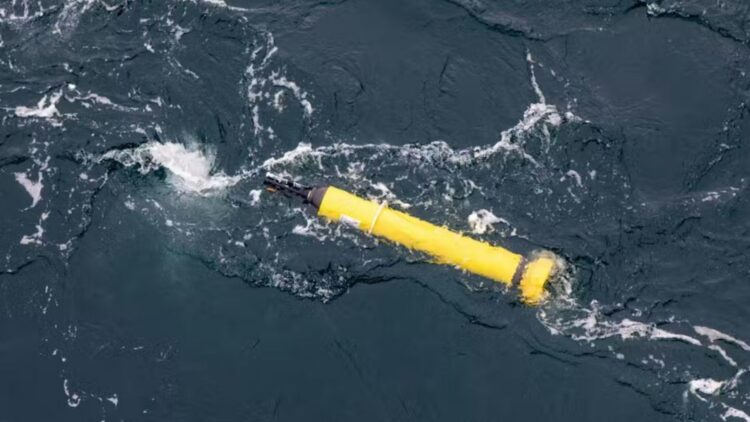
It had been lost for almost two years, a small scientific robot that was stranded under the ice in Antarctica. There was no signal from it and the scientific world considered it finished, but two years later it reappeared and delivered data that no one had managed to obtain before.
A historic mission
The protagonist was an ocean robot from the international Argo program. Its mission was to measure temperature and salinity in the oceans and send them by satellite so that this information could be studied, but this robot decided to take its own path. Shortly after being deployed near the Totten Glacier, one of the largest in East Antarctica, it stopped communicating. Researchers assumed it had been lost or trapped under the ice forever, but while frustration reigned, the robot kept working in the darkness of the cold.
Under kilometers of ice
For almost nine months, the float moved under ice shelves that have barely been explored. It passed near glaciers such as Denman and Shackleton, descended to almost two kilometers deep, rose, went down again, and in each cycle stored key data such as temperature, possible changes, and water salinity. And it left something crucial to investigate: ice does not only melt from above, but also from below and in contact with the ocean.
They thought it was dead
When they confirmed that no one had information from this robot, it managed to emerge from under the ice and send the information it had collected by satellite. Images and unpublished data made it clear that there was warmer water than expected beneath some ice shelves and near the Denman Glacier. When the water is warmer, it accelerates the sliding of ice toward the ocean, and that is what causes sea levels to rise.
Very valuable information
More than 90 percent of the extra heat generated by climate change ends up in the oceans, but until now we did not know that the base of ice shelves was also melting. Who would have thought that a lost robot would give us such important information to help reverse this situation?
Giant glaciers, global consequences
The Totten Glacier was the initial target of the study, and it is one of the largest glaciers. It contains enough ice to raise sea levels by more than three meters if it were to melt completely. Now we know it is much more vulnerable than we thought.
And how did they know where the robot had gone?
Even though it may seem very difficult to understand, researchers compared the contact with ice measurements recorded by other platforms, and that is how they know the data came from areas that had never been studied before, all without using GPS.
Making mistakes is moving forward
Many thought it had been a failed mission, but quite the opposite. It opened a new way to study Antarctic ice. Now, thanks to this robot, scientists will be able to send much better missions that do not require constant supervision.
It came back from the dead
And it came back with a warning we cannot ignore. The ocean is changing much faster than it should, and now it is in our hands to reverse this effect, which is clearly a consequence of climate change. What happens today under kilometers of ice will define the sea level that will affect millions of people very soon.