
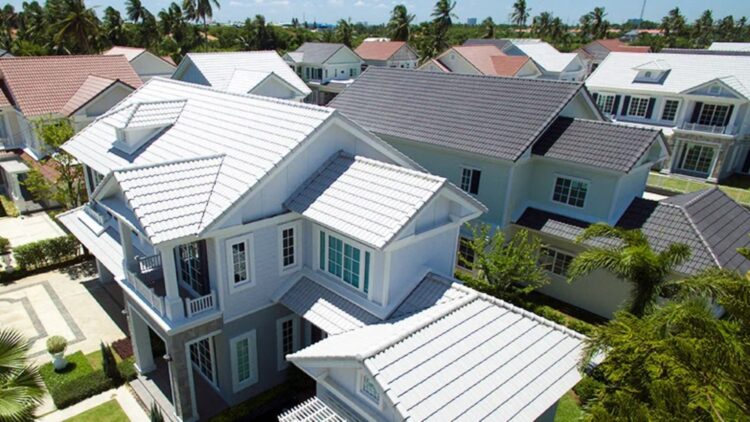
A city in the southern United States has started a big conversation after approving a new law that requires all new buildings to have the same type of roof — one that is lighter and more reflective. At first, it might sound strange or even unnecessary. But according to scientists, this simple change could help fight extreme heat, save money, and even make the city healthier. So, let’s learn more about this change.
The problem
I’m sure you’ve noticed the temperatures are getting higher every year, and we might think the only reason for this is global warming. However, the materials used in buildings, streets, and sidewalks — like asphalt and concrete — also have something to do with it since they absorb heat during the day and release it slowly at night. This creates what experts call “urban heat islands” — places where the temperature can be several degrees higher than in surrounding rural areas. These areas can be especially dangerous for children, older adults, and people with health problems.
According to The New York Times, deaths caused by extreme heat in the U.S. have increased by 117% since 2000. That’s why some cities are looking for creative solutions — and Atlanta, Georgia, just took a bold step.
New buildings
Atlanta recently passed a law that requires all new buildings and roof replacements to use what’s called a “cool roof” — a surface designed to reflect sunlight instead of absorbing it. These cool roofs don’t have to be bright white, but they must be light and reflective enough to bounce heat away. It doesn’t mean current homeowners don’t need to change their roofs yet, but every new construction or major renovation must follow this rule.
Scientists estimate that this could lower the city’s average temperature by about 2.4°F, and in some of the hottest neighborhoods, by as much as 6.3°F. That may not sound like much, but it could make a big difference during extreme heat waves — and even save lives.
Lower costs and energy savings
Do you want to know another positive thing about these reflective roofs? They will also save energy and money: buildings won’t get as hot, therefore, air conditioners won’t have to work as hard, which means lower electricity bills.
Experts predict that over the next 35 years, the city could save around $315 million in total energy costs. Even better, these new roofs don’t cost more to install than traditional ones — in fact, they might even be cheaper and last longer since they’re less damaged by constant heat.
Greg Kats, founder and CEO of the nonprofit Smart Surfaces Coalition, said it’s a win-win situation: “It’s a super cost-effective way to make the city healthier, more competitive, cut energy bills, and protect jobs.”
Fighting heat building by building
The biggest problem in cities like Atlanta is how buildings and roads trap heat. Why is this happening? Well, there aren’t enough trees or green spaces, which makes the air hotter and the ground stay warm, therefore, people could feel this 24 hours.
But, the new cool roofs is thought to solve this by reflecting sunlight. They’ll not only cool down individual buildings but also help lower the overall temperature across entire neighborhoods.
City Councilor Liliana Bakhtiari, who wrote the bill, said that this new law is about much more than changing the color of roofs. “This legislation is not just about roofs; it’s about resilience,” she said. By making this rule, Atlanta has gone even further than other major cities like Chicago, Los Angeles, and New York, which have also started promoting reflective roofs but not yet made them mandatory for all new buildings.
A simple change for a better future
At first glance, requiring all new buildings to have reflective roofs might seem like a small thing. But it’s actually a powerful step toward making cities cooler, cleaner, and more livable.
Sometimes, the best solutions to big problems — like climate change — start with something as simple as changing the color of a roof.