
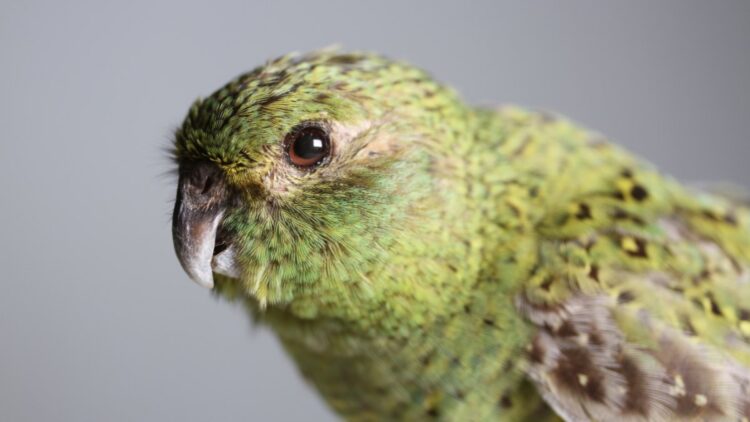
Not all birds are easy to see because some live in hidden places, others only move at night, and a few are so elusive they seem almost mythical. This is the case of the night parrot, a small green and yellow parrot from Australia’s desert interior. For more than a century, many people believed it was extinct, but a recent work in Ngururrpa Country has proved the opposite: this mysterious parrot is still alive, but the number of birds is low. So, let’s learn more about this particular bird.
Looking for the lost bird
Between 2020 and 2023, indigenous rangers and scientists worked together to answer three questions:
- Where does the night parrot live?
- What threatens it?
- How can it be protected?
Instead of waiting to see it by chance, they combined traditional and modern tools: Audio recorders were placed across dozens of desert sites. This was done because the night parrot has unique calls that make it easier to detect on tape. Once they confirmed its presence, they placed camera traps to observe nearby predators and they also analyzed scat samples to know what the animals were eating. What’s more, they used satellite images to study how often there were fires.
Nick Leseberg, ecologist from the Queensland University, explained how peculiar this bird’s sounds were: one seemed like a telephone with a “didly dip, didly dip,” while another sounded like a bell with a “dink dink.”
What they found
They detected the bird in more than half of the places they studied, which proves that there is a real population and not just isolated night parrots. Also, they found daytime roosts in dense, mature clumps of spinifex grass. The key plant here is the bull spinifex, which grows into dome-like shelters that are crucial because younger and thinner grass doesn’t provide the same cover. Without old, tightly packed spinifex, the bird loses its safe hiding places.
Fire and fragile shelters
In the Great Sandy Desert there are many lightning and intense droughts that provoke fires very fast. When the fire is very frequent, the spinifex doesn’t reach the needed years to make those shelters. The study showed that many areas are burned every few years, too fast for this type of plant to mature.
The solution is reasonable: make controlled and cooler burns at specific times of the year. This makes a patchwork of landscapes with natural breaks, lowering the risk of a massive wildfire wiping out parrot shelters in a single sweep.
Predators and balance
The cameras revealed dingoes roaming near parrot habitat. At first, that sounds dangerous for a small ground-dwelling bird. But scat analysis told a different story. Dingoes often eat cats — and feral cats are a much bigger problem for night parrots. Cats hunt silently at night and are capable of wiping out chicks and fledglings.
This balance is important because the less dingoes, the more cats, which implies a higher pressure over the night parrot. So, keeping dingoes in the ecosystem helps more babies to survive in their first weeks.
How many of these birds are left?
According to the recordings and the amount of calls, researchers estimate that in Ngururrpa Country there are about 50 night parrots. This might seem like nothing, but for a species with so few confirmed sightings across Australia, it’s really important. However, this doesn’t guarantee safety because a season of fires could destroy the bird’s habitat. Predator control programs that harm dingoes might give cats more room to expand. Even disturbances like vehicle tracks, weeds, or grazing stock could tip the fragile balance.
What can be done?
The recommendations are clear:
- lean on the rangers’ deep local knowledge, using mapping tools to guide careful, cooler-season burns.
- Protect dingoes that help control the cats.
- Keep the landscape quiet, free from grazing animals and unnecessary disturbance.
Lesson to learn from the night parrot
The rediscovery of this bird shows what happens when science and indigenous knowledge work together. This particular bird might be small and shy, but its story reminds how fragile ecosystems are and how much they depend on balance.