
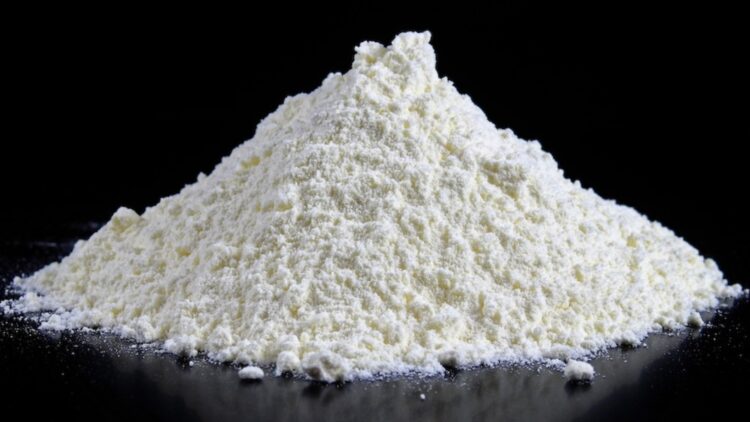
Did you know that Australia is transforming the way we produce and transport green hydrogen? Thanks to a project led by Curtin University and supported by ARENA, innovative technology is being developed to turn hydrogen into powder, using sodium borohydride. The advantage? It’s easier, safer, and cheaper to move. This breakthrough, part of the Kotai Hydrogen Project along with Velox Energy Materials, could bring clean energy from Australia to countries like Germany, Japan, and South Korea.
We have heard about hydrogen used in vehicles, but not in the form of powder. So, let’s see in more detail this revolutionizing hydrogen form.
What is Australia doing with powdered hydrogen?
Australia has developed a futuristic and novel way to produce and transport green hydrogen in powdered form, and it is becoming one of the pioneering countries in this field. This powdered hydrogen is considered the most advanced form of hydrogen so far and is being created thanks to a research project led by Curtin University with support from Velox Energy Materials and $5 million in funding from the Australian government through ARENA (Australian Renewable Energy Agency).
The goal of this project is to facilitate the transport and export of green hydrogen, something that has been very complex so far due to the limitations of previous technologies.
What is green hydrogen and why is it important?
Green hydrogen is hydrogen produced using renewable energy, for example through electrolysis using solar or wind power. It is a clean, emission-free fuel that can replace fossil fuels in many industries (such as transport, electricity generation or industrial processes). But its big disadvantage has been storage and transport:
- Gaseous hydrogen needs to be compressed at high pressure.
- Liquid hydrogen must be cooled to -253 °C, which consumes a lot of energy.
- Ammonia has also been used, but it involves complex and expensive chemical processes.
What role does sodium borohydride (NaBH₄) powder play?
Australia has opted for a different solution: using a powder called sodium borohydride (NaBH₄). This powder can store hydrogen safely and release it when it comes into contact with water. The process is as follows:
- NaBH₄ powder is transported.
- When water is added, hydrogen is released in a controlled way.
- A residue remains: sodium metaborate (NaBO₂).
The problem until now was that this residue (NaBO₂) could not be recycled cheaply. Therefore, the use of NaBH₄ was not practical on a large scale. But the breakthrough achieved by Curtin University and its partners is that they have managed to recycle NaBO₂ into NaBH₄ at low cost through a catalytic regeneration process. This is a very important change, because it makes this method viable as a way to export hydrogen in powder form economically and in a reusable way.
Hydrogen production goals in Australia
Australia has set clear and ambitious targets for producing green hydrogen:
- By 2030, it wants to produce 330,000 tonnes of green hydrogen per year.
- By 2040, it will increase that amount to 550,000 tonnes annually, which is equal to 550 million kilograms.
What does this amount of hydrogen represent?
Each kilogram of hydrogen generates around 33.3 kWh of energy. Therefore, if Australia manages to produce 550 million kg of green hydrogen per year, that would be enough to generate more than 18 billion kWh (18,315,000,000 kWh) which could supply around 2.5 million Australian households per year.
How much NaBH₄ is needed to produce that amount?
1 tonne of NaBH₄ can release 213 kg of hydrogen when mixed with water. To produce 550,000 tonnes of hydrogen, about 2.58 million tonnes of NaBH₄ would be needed. This powder can be regenerated, thanks to the newly developed process, which allows the system to function in a circular and sustainable way.
Exporting powdered hydrogen: a global solution
Australia aims to export powdered hydrogen to countries like Germany, Japan, and South Korea. Why these places? Because they have big zero-emissions goals but don’t have the natural resources or space to produce enough green hydrogen themselves. That’s where Australia steps in — becoming a global hydrogen supplier by sending it in powder form, which is:
- Easier and safer to transport.
- Cheaper than liquid or compressed hydrogen.
- Scalable and with a regenerative process that closes the cycle.
This is all part of the Kotai Hydrogen Project, with a budget of $16.47 million and running through 2029. This breakthrough could really change the global energy market by making green hydrogen easier and more practical to export. It’s a win-win — helping countries cut their carbon footprint while boosting Australia’s role as a clean energy leader. This is amazing, right?