
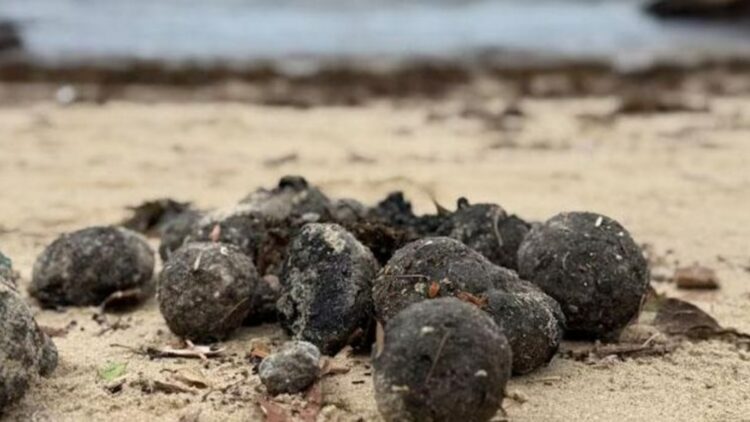
The beaches of South Wales have turned black. Thousands of small black balls covered the sand and the water, but no one knew where they had come from.
After many tests (and many theories, which we love), the Environmental Protection Authority of New South Wales (EPA) confirmed that the origin was in the Malabar wastewater treatment system, operated by Sydney Water. Yes, those mysterious spheres came directly from the sewer and were human waste residues.
The entire coast on alert
It all happened a year ago and was repeated this past February. The first balls appeared on one beach, then another… and there were 17 affected areas in total.
Of course, while the authorities investigated, they closed access to the beaches because at first it was believed to be oil or some kind of chemical waste.
Swimmers, understandably, panicked. Some thought it was industrial residue; others, some kind of toxic spill, in any case, they believed their health was at risk.
But the analyses ruled out health dangers, although the balls did contain some unpleasant things (organic matter, synthetic fibers, human hair, and traces of hydrocarbons). It all pointed to a failure in the wastewater system, and those small pellets were, in reality, waste… you know, waste.
“The analyses revealed that they were made up of fatty acids and materials typical of wastewater, although without dangerous bacteria like E. coli” the EPA explained in its report.
The Malabar system
After weeks of investigation, the EPA’s Independent Panel of Wastewater Experts concluded that the entire problem occurred at the Malabar Treatment Plant (one of the largest in Australia). Apparently, an internal failure had accidentally released untreated waste into the sea, and the currents did the rest, carrying those small balls across several kilometers until they reached the shores.
And although it’s not a massive biological catastrophe, it is an environmental failure, a treatment system should be precisely that: a barrier, not a source of pollution (especially in a place where tourism is one of the main sources of income…).
Outrage and concern
Images of beaches covered in black spheres flooded social media, as expected. Several photos went viral, and outrage spread across the country. Many users expressed concern that it could happen again.
Many pointed out the obvious: if it happened once, it could happen again.
And if this happens in a country with resources and environmental controls, what can we expect for the rest of the world?
Cleanup against the clock
The EPA demanded that Sydney Water conduct a full internal investigation and present an action plan. Now the company must propose short-, medium-, and long-term measures to prevent something like this from happening again.
Meanwhile, cleanup teams are working nonstop to remove the remains from the coastline, a task that could take months since every tide brings in new debris.
A wake-up call (with a sewer smell)
Our ecosystems are very fragile, and this seems to be a wake-up call from Mother Nature to remind us to take better care of our coastal environments, because any accident, no matter how small, ends up in the sea.
With climate change worsening storms and floods, sanitation systems are becoming increasingly overloaded, and incidents like this must be prevented (even if they are organic waste), because…
If they are not updated soon, this kind of incident could become common.
We must be clear that the sea is not a landfill, not ours or anyone’s, and that marine life is already under enough pressure without us continuing to dump more and more waste. It’s time to wake up and start protecting what we have before it’s too late.