
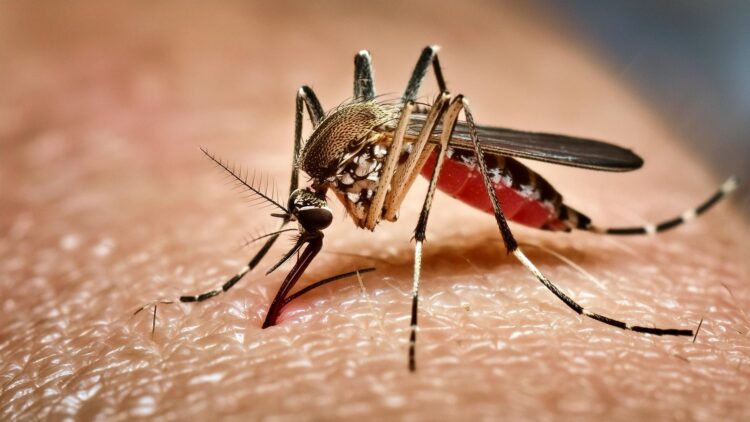
Surely you have ever wondered why you are the favourite dish of mosquitoes and your friends are not? You are not alone, some of us suffer from it too. And for some, going out to enjoy a summer night in the open air becomes a real fight killing mosquitoes… And dozens of bites on our body. Has it ever happened to you? Now, a recent study carried out in Zambia has revealed that mosquitoes prefer certain body odours over others, which explains why some people are irresistible to these insects. Read on to find out why some of us are the favourites on the menu of these small and annoying hunters.
Understanding mosquitoes
To study this fact, a team of scientists decided to build a cage more than 20 meters high, which they called a “flight cage.” This experiment involved releasing 200 hungry mosquitoes each night, and, through a ventilation system that carried the body odour of six volunteers (who slept in individual tents separated from each other). In these tents there was synthetic skin that simulated human skin called “landing pads.” And, using infrared, the researchers were checking which way the most insects moved.
The result was very clear: mosquitoes prefer odours that contain carboxylic acids, a compound that is produced in the bacteria in our doorway. However, odours with high levels of eucalyptol (a compound related to plant diets) were less attractive to these mosquitoes.
Why would a smell be irresistible?
The study identified up to 40 different chemical compounds in the volunteers’ odours, and it turned out that carboxylic acids acted like a good pizza smell when leaving work – who could resist that?
Author Conor McMenima, an adjunct professor at the Johns Hopkins Bloomberg School of Public Health and the Johns Hopkins Malaria Research Institute, reflected on the experiment, on the one hand, confirming that mosquitoes “hunt” humans and that their favourite time to do so is always at dusk and at dawn. On the other hand, his main motivation for carrying out this research was to understand that mosquitoes follow scent trails and the warm air currents that humans give off. They wanted to study which odours are most attractive to them during their most active hours, when they are out looking for someone to bite, and also to analyses how they perceive the smell of sleeping people during that same period.
A step against malaria
This research focused primarily on the African malaria mosquito, a disease found throughout sub-Saharan Africa, so as to understand what attracts it and open the door to developing more effective repellents based on these natural ecualyptol compounds that turned out to be more unpleasant for mosquitoes.
In addition, it showed that mosquitoes are very clever animals that are able to guide themselves to their prey only by heat and smell!
How can we protect ourselves?
It is impossible to change our genetics, but not our habits. Although we cannot eliminate all the microbes from our skin, we can adapt to a diet rich in vegetables so that the chemical compounds we emit are gradually modified, and above all, wait for the development of new mosquito repellents that will keep us safe in our nocturnal meetings!
Natural repellents that we can use:
If you are one of those who prefer natural options to keep mosquitoes away, there are several effective alternatives. You have surely already heard of plants such as citronella, basil and lavender, which can act as natural repellents (due to their essential oils). You can also use these essential oils diluted in water as a spray to apply on the skin or clothing. Another strategy is to keep windows protected with mesh. In addition, lighting citronella candles or using fans outdoors can make it difficult for them to fly and reduce their presence.
What if I’ve already been bitten?
Don’t scratch… first of all, even if it’s difficult, don’t scratch it because you’ll activate the bite and it will be worse. Wash the infected area with soap and water and apply an antihistamine cream or aloe vera. If you prefer a natural remedy, vinegar or a slice of lemon to soothe the skin!
So, the next time a mosquito chooses you as its favourite meal, remember: it may not just be a matter of chance, but chemistry! And with science on our side, we are one step closer to keeping these pesky hunters at bay!