
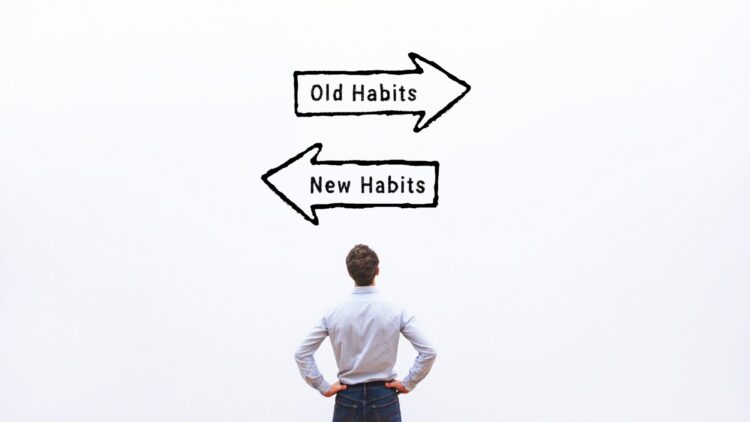
How many times have you started a Monday full of excitement, promising yourself that this time you’re really going to change? That this time you’ll go to the gym, eat healthy, or stop leaving everything for tomorrow… And yet, after a few days, some of us just need hours, that impulse disappears, and everything goes back to the way it was. Don’t worry: you’re not alone, and you’re definitely not broken. What’s happening isn’t a lack of character, but that you’re asking your brain to work against its own nature.
Willpower has always been the holy grail of personal development. You’ve surely heard “if you want it, you can do it,” but what if they told you that’s not true? That the brain actually hates wasting energy fighting its own habits every day. That the key isn’t discipline or consistency, but something much more subtle and powerful: automating what you want to change.
What happens when we create habits?
According to James Clear, author of the bestseller Atomic Habits, relying solely on willpower is a recipe for failure, but our brain has a plan B, and it has nothing to do with “trying harder.”
According to Clear, our brain isn’t designed to fight what’s comfortable and familiar, which is why creating new habits feels like such an uphill battle. He proposes creating systems that lead to these new habits, that is, gradually introducing aspects of the new habit so that you don’t depend on discipline and consistency, simplifying everything so that it becomes automatic.
What is a habit?
It’s a behaviour or action we repeat regularly until it becomes almost automatic, something we do without thinking too much about it.
From a psychological perspective, a habit is a learned response to a stimulus, and it forms through repetition. The more we repeat an action in a specific context, the easier it is for the brain to activate it without conscious effort. In fact, habits reside in a part of the brain called the basal ganglia, which is responsible for automatic routines.
But even if it sounds easy, forming a new habit is very hard, as we mentioned before. So let’s explain what Clear proposes with “personal automation”.
What is personal automation?
This action involves designing your environment and routines to reduce the number of decisions you make each day. The fewer decisions, the less mental fatigue. And the more likely it is that your new habit will stick over time.
For example, two big examples of this automation are Steve Jobs (who wore the same clothes every day) and Mark Zuckerberg (who did the same for years). Why? To avoid spending energy deciding what to wear. That automatic routine allowed them to save energy for more important decisions. And if it worked so well for them, why not for us?
What happens to our brain?
Our brain is designed for proceduralizing, basically, habit creation is based on brain plasticity. Wait, we’ll explain: through repetition (yes, we already said that!), it’s about repeating actions until they’re learned, optimized, and executed unconsciously and involuntarily, like brushing your teeth or showering.
How do we implement habits with this new trick?
Think about how you get dressed, how you eat breakfast, or the order in which you leave the house. You don’t think about it, you just do it. That’s how an automated habit works. If you want to start exercising, for example, lay out your workout clothes the night before. If you want to eat healthier, prep your meals on Sunday. Remove the thinking, and the habit appears.
Want to drink more water? Leave a bottle on your desk. Want to stop using your phone at night? Charge it in another room. You don’t need willpower, you just need to have everything ready so there are no excuses. So the key is simply to optimize your mental resources (and make as few decisions as possible).
Is it good to automate decisions?
That’s what Thinkwasabi suggests, because when you automate the basics, you free up mental space for creativity, problem-solving, or rest. The brain goes into “autopilot.” That way, when you no longer have to debate whether or not to do something, stress goes down. Over time, you become someone who “just does it,” effortlessly. It’s a quiet but very powerful transformation.
The key to change isn’t punishing yourself for what you don’t do, but making it easier for your future self to do what they actually want. You just need to be a little smarter (though some might say it’s lazy). Let us know how it goes when you try out this technique!