
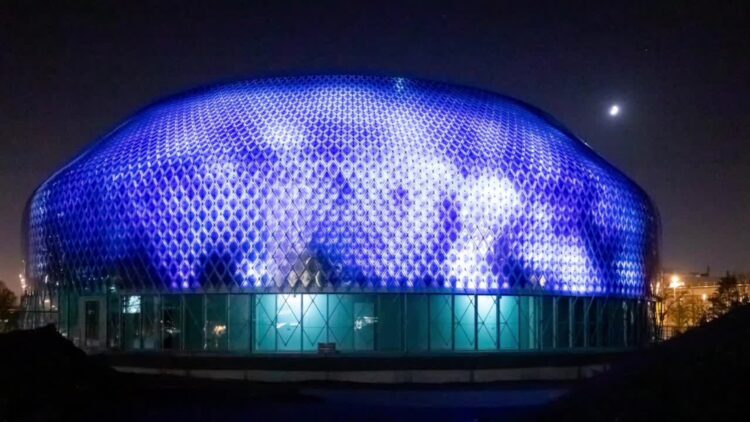
Novartis Pavillon, one of the most innovative buildings in the current sustainable architecture. They tend to have a modern structure with a very eye-catching design, but this pioneer project is more than that. This building combines solar technology, artistic design and ecologist awareness. The aim of Novartis Pavillon is to produce the same amount of energy it consumes.
Solar energy has been used in many sectors, even in the automotive industry, but this will make an impact on the architecture industry. So, let’s learn more about this building!
Novartis Pavillon building
This building is located in Basel, Switzerland, and it is going to be a pioneer in the architecture sector. It has 10,000 organic solar modules, known as OPV (Organic Photovoltaics), which are very different to traditional solar panels because they are made of organic materials, are lighter and they adapt better to curved and irregular shapes.
These modules are placed all over the building’s surface and it’s used for two things: recollecting sunlight during the day to generate electricity, and as an interactive screen with 30,000 LEDs RGBW (red, green, blue and white) inside and outside of the building.
Visual show
Why does a building have a screen? Because it will be used during the day to show scientific information, health data and messages related to Novartis mission. Also, at night, this screen will be used, but for a different purpose: become a digital piece of art. Images, paintings and visual interpretations created by artists and scientists will be displayed on the building.
In case you are wondering, the art content is done by Daniel Canogar in collaboration with Esther Hunziker and Novartis scientific team. This combination of people will make Novartis Pavillon’s facade a way of communication with the public, apart from the obvious decorative aspect.
Sustainability and architecture
The original design was developed by AMDL CIRCLE studio which is led by the renowned architect Michele De Lucchi. Later on, the Swiss studio iart joined the project to provide what they know best: media architecture and technology integration. Thanks to this collaboration, the building got a balance between aesthetics, functionality and sustainability.
They decided to give the building a circular shape similar to a doughnut, thought to make the solar modules installation much easier. The combination of futuristic architecture, energy efficiency and artistic content makes this building a unique one.
Energy
One of the most remarkable features of the Novartis Pavillon is the fact that it can consume and produce energy at the same time! Can you even imagine it? This is done thanks to the organic solar panels, this way the building doesn’t depend on external energy sources and it can reduce the environmental footprint.
The balance between energy consumption and generation has been crucial for Novartis Pavillon to be a model to follow for future sustainable architectural creations.
More than a building
As we have seen throughout the entire article, the Novartis Pavillon is useful for many activities related to health and science, but it also inspires and educates those who visit it or just look at it.
This structure has made a huge impact with its capability to generate its own energy and its ‘’digital skin’’. It has been nominated for the Dezeen Awards, one of the most important awards in the world for architecture and design.
We have seen technology incorporated into many things, but this way is on another level. Designers have given this building a different and innovative way of using it, which is very accurate for the current times of technology we live in. Have you ever seen anything like it?