
Double-ply, extra soft, four cuts… How do you use it? During the early days of the COVID-19 pandemic, toilet paper undoubtedly became the star of our shopping carts. Collective hysteria and herd behaviour led us to buy so much toilet paper that there are probably still rolls rolling around in more than a few homes… The mistaken belief that toilet paper was an essential resource that could run out forever invaded our bodies and made us buy compulsively.
Now, it seems silly, if there was no paper, we could’ve cleaned ourselves with a cloth or just water, like they do in many places; but at the time, it felt totally normal to see people in the supermarket line fighting over the last pack of double-ply toilet paper with little blue clouds.
And now you’re thinking, why bring this up again? Well, maybe we’re witnessing the end of toilet paper, yes, the end! In Asia, they’re working on a substitute for our bathroom buddy. Hold on, we’ll tell you more.
Where does this product come from?
Invented in 1857 and popularized in the late 19th century, toilet paper became a staple in every household. But now, with so much technological revolution and a clear path toward eco-friendliness, many are starting to realize that producing these paper rolls involves a huge environmental cost: tree cutting, water pollution from chemicals… It’s something we need to start controlling if we really want to avoid drowning in the greenhouse effect.
The ecological footprint
In the United States, Canada, and Western Europe, one person can use between 15 and 25 kilos of toilet paper per year. Even though that only represents about 10% of the paper produced globally, the industry still relies mostly on virgin pulp, and the process of turning wood into tissue is incredibly polluting…
And consumption keeps rising… On top of that, many rolls are now treated with perfumes, bleach, and other chemicals that, as expected, worsen the environmental impact.
The bum gun: the future is already here
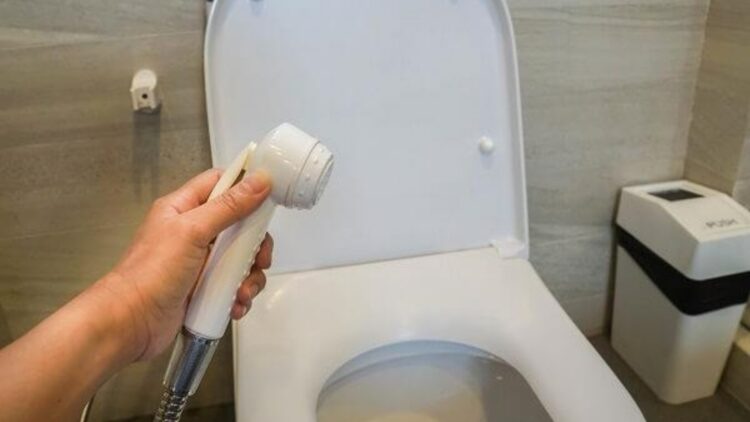
In countries like Thailand, Indonesia, Malaysia, or Singapore, the “bum gun”, and yes, it’s literally what you think (and no, it’s not a joke), a “gun” for your butt, almost like the water guns our kids take to the pool, has become the new bathroom essential.
Its use not only reduces the need for paper, but it also uses much less water than conventional toilet paper manufacturing. This small, cheap, and easy-to-install device is a practical and eco-friendly solution that more and more travellers discover when visiting Asia, and many have already started adding it to their homes elsewhere in the world.
Europe wants a change too
The European Union has started moving in the same direction as these Asian countries, approving laws that ban products linked to deforestation, which could directly affect toilet paper made from unsustainable pulp. There have even been symbolic protests in the European Parliament replacing rolls with eco messages.
And what about the United States?
Even though toilet paper is still the bathroom king in the U.S., younger generations are showing greater interest in more sustainable alternatives. The bum gun, along with traditional bidets, is slowly making its way into major brand catalogues. And honestly… who doesn’t like a good bidet?
So, what’s the real challenge?
The main challenge is cultural. Toilet paper is so deeply embedded in our habits that changing that takes time, education, and normalization. It’s a process similar to what happened with menstrual hygiene and menstrual cups, only on a much bigger scale.
We need sustainable alternatives and a clean butt, the bum gun checks all the boxes. Could it be that the ecological revolution starts with how we wipe our butts? We never would’ve guessed…