
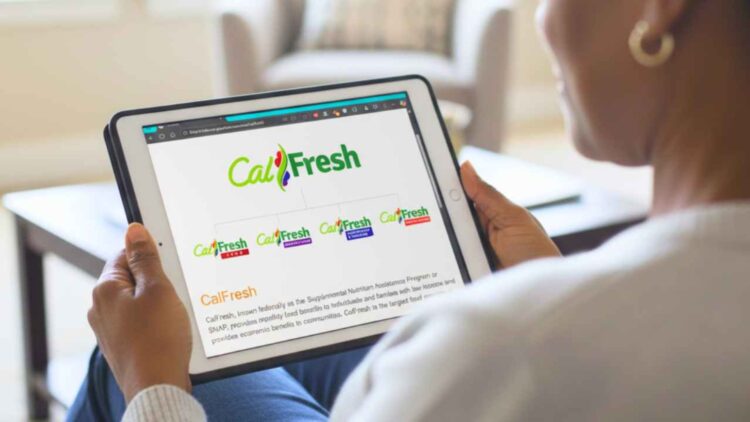
Big changes are coming for people who receive CalFresh in California, the state program that sends food aid through federal benefits known as SNAP. Two new federal laws (the Fiscal Responsibility Act of 2023 (FRA) and the One Big Beautiful Bill Act of 2025 (OBBB)) have modified the rules about who can obtain this aid and for how long.
These laws were passed in July of this year and will directly affect millions of people in the entire state. Even though the goal is to reduce the number of beneficiaries who receive help without working, which also means that many homes could lose their Cal Fresh benefits. As you can imagine, this worries families who depend on this food support. So, let’s learn more details about it.
Who is affected by the new Cal Fresh rules?
The most affected group is the one called Able-Bodied Adults Without Dependents (ABAWDs). In this group we can find people who:
- Is between 18 and 64 years old.
- Don’t have children nor dependent family members.
- Are physically and mentally capable to work.
Before, this group included adults ranging from 18 to 54 years old, but now that age range has been expanded. Therefore, more people will be affected by working requirements to keep their food aid.
The new rules
The new laws change several important aspects like: age, work conditions, and exceptions. Now, we are going to explain the main point:
- Age range expanded: Before these changes, only people between 18 and 54 years old had to match the ABAWDs’ special rules. Now, every adult from 18 to 64 years old must follow them too if they don’t want to lose their CalFresh benefits.
- 3-months rule: according to the new laws, adults from the ABAWDs group could only receive CalFresh benefits for 3 months within the period of 3 years (36 months). Unless they follow the working requirement… After those 3 months, if they don’t, they will stop receiving that food aid.
- Working requirement: to keep receiving CalFresh benefits after those 3 first months, ABAWDs beneficiaries must match one of these situations: work at least 80 hours per month, take part in an approved job training or employment program, or do volunteer or community service work that adds up to 80 hours a month. If they don’t meet the 80-hour minimum, their CalFresh benefits will stop until they meet the requirement again.
- The end of temporary protections: for the last couple of years, the government gave temporary protections to some vulnerable groups so that they could keep receiving help, even though they didn’t meet the working requirements. These exceptions came from the Fiscal Responsibility Act (FRA), but they are now being eliminated.
When will the new CalFresh rules start?
They were scheduled to start in July of this year, but California received a state waiver from the U.S. Department of Agriculture (USDA). This waiver delays the start of the new work and time limits for ABAWDs until January 31, 2026.
Current requirements to receive CalFresh
In the meantime, basic requirements to access CalFresh are still the same:
- Income limit: a household must have income below the federal poverty level. In California, this usually means being below 200% of the federal poverty line.
- Citizenship or immigration status: at least one person in the household must be a U.S. citizen or have legal immigration status that qualifies.
- Work and time limits for ABAWDs: adults aged 18 to 64 who don’t have dependents can receive CalFresh benefits for only three months within a 36-month period unless they work or participate in a job training program for at least 80 hours per month.
So, the most important thing now is for current CalFresh participants to stay informed about these updates and to prepare for the work requirement once it begins in 2026.