
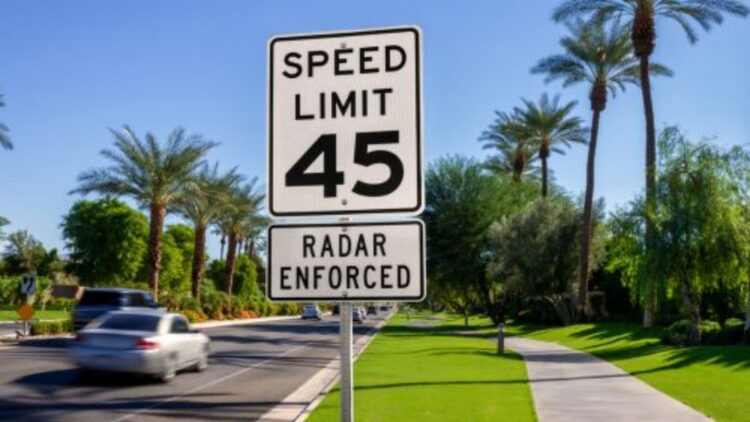
Everything California drivers know is going to change completely in the coming years. Don’t worry, because this is something we’ve known for a while, and it’s simply a measure to strengthen the safety of all users inside vehicles. California has established a new requirement that by 2030, all vehicles sold new or leased must include speed sensors that alert users when they exceed the speed limit. This measure supports SB 961, which seeks to reduce the accident and death rate on highways.
How will speed sensors work?
The new safety systems will be able to identify the speed limit for the area in which the vehicle is traveling. If the driver exceeds the limit by more than 10 mph (16 km/h), the sensor will issue visual and audible alerts to warn them.
However, the regulations do not specify whether, in the future, these systems will be able to automatically limit vehicle speed, a technology already being tested in other countries for the same purpose.
When will it be implemented?
There’s no set date yet, as it depends on Governor Gavin Newsom’s signature. However, if we know one thing, it’s that the regulation has already been approved by the State Legislature and is expected to go into effect soon, with no major changes.
Which cars will be required to have them?
The law will affect all new cars manufactured, sold, or leased in California from 2030 onward. However, some vehicles will be exempt from this regulation.
Vehicles exempt from the regulation
Among the vehicles that will not be required to have these sensors are emergency vehicles (ambulances and police cars), motorcycles and mopeds, as well as motorized bicycles. Some trucks will also be exempt.
What about vehicles manufactured before 2030?
Considerations are being given to adding a speed sensor to vehicles manufactured before 2030, as it wouldn’t make much sense to promote a law if the majority of a city’s vehicles were likely purchased before that date.
Will it affect drivers?
Like any regulation, it has generated divided opinions, but safety experts are clear that this could help reduce road accidents due to speeding, and thus save lives, since the road death rate recorded in the country in 2024 was still 18,720. So, the conclusion is clear: although some users warn that the alerts could be annoying or distracting, or that they might even restrict their freedom behind the wheel, the reality is different: almost 19,000 families were devastated last year by speeding problems on the roads. Therefore, this regulation will only aim to ensure that many more families arrive home safely after driving in the coming years. Will this be the first step toward a future where speed limits are truly key?