
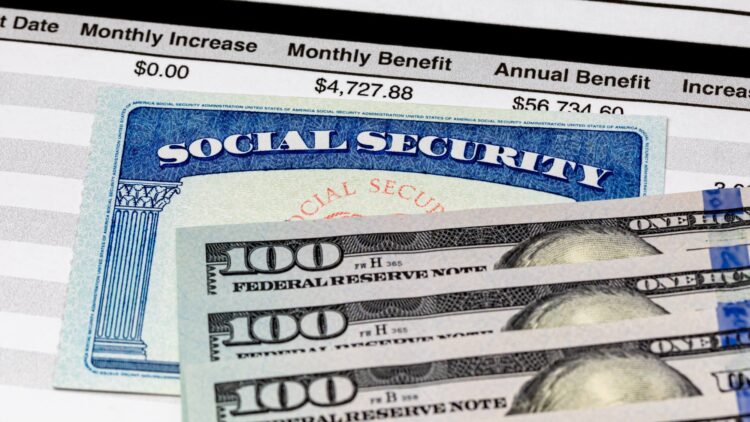
Keep your eyes and ears open, because the Social Security Administration (SSA) has announced that it will be making very significant changes to its program payments at the end of the year, and this will have a direct impact on the cost-of-living adjustment (COLA). This annual adjustment, which was designed to maintain purchasing power in the face of the huge inflation we were experiencing, will have a direct impact on the accounts of millions of beneficiaries in 2025. Here we tell you what will happen to your COLA, keep reading!
Why is Social Security going to change again?
Let’s go step by step. Social Security was created to help Americans avoid poverty, that is, to cover the basic needs of those individuals who do not have enough money or who simply need extra support in key situations. With this payment, it is estimated that the basic needs of a family can be met (food, clothing, health care and school), but, as the economy is not a static entity but changes practically every day, this adjustment also varies, using what we call COLA (cost of living adjustment). Wait, even if you don’t understand anything, we will explain it to you well.
What is the COLA?
It is a type of economic adjustment that the SSA makes every year so that money continues to have the same value despite inflation.
This adjustment is calculated by observing the increase in the prices of basic products (those we buy daily, such as food and gasoline). In summary, this adjustment helps users not lose purchasing power when making purchases.
Every October, the SSA uses the average of the CPI-W (consumer price index for urban wage earners and administrative employees) from the previous months. Once that figure is calculated, the SSA adjusts the amount each beneficiary receives so that they can go about their normal life without noticing that rise in inflation.
How will the COLA evolve?
Well, mainly, it will depend on what range you are in. Here is the data depending on the social group to which you belong:
Retirement Benefits (Old-Age)
- Average Current Benefits: Retirement beneficiaries receive an average of $1,871.09 per month in 2024. With the COLA adjustment for 2025, this amount would increase to approximately $1,920 per month.
- Maximum at age 62: Currently, those who retire early can receive up to $2,710, but it could rise to $2,781 in 2025.
- Maximum at age 67: Beneficiaries who wait until full retirement age receive up to $3,822, a value that would increase to $3,923 with the COLA.
- Maximum at age 70: Those who delay retirement can receive up to $4,873 per month, a figure that could reach $5,001 in 2025!
As for people with disabilities and survivors, the data reflects the following:
- Current Average: If you receive disability payments, the monthly average is $1,404.75. With the COLA adjustment, this amount will rise to about $1,441 in 2025.
- Monthly Maximum: For those who qualify for the maximum level of SSDI, the payment will go from $3,627 to about $3,721
Survivors Benefits
- Survivors currently receive an average of $1,509.29 per month. In 2025 this amount could increase to about $1,548.
- For parents with dependent children, monthly payments will increase from $1,483 to $1,520 on average.
- For those receiving SSI, payments will increase from $695.84 to $714.
- Individual recipients: They will be able to receive up to $968 a month, up from the current $943.
- Eligible couples: Their maximum amount will increase from $1,415 to $1,452.
- Essential individuals: Those who provide assistance to SSI recipients will receive an increase from $472 to $497 a month.
How will Social Security benefits change?
You have already seen that the COLA does not have a fixed value, but rather it adapts to the market itself. To know what will happen from now on, you can do the “old math” and review month by month how this payment has been modified.
For 2025, the COLA projections range between 2.57% and 2.63%, according to data from the Senior Citizens League. Although this has several interpretations, since it represents a nominal increase in payments, its relationship with inflation could mean that, even if you receive more money, your purchasing power (that is, your ability to buy) remains the same.
This is the problem with the COLA being so closely linked to inflation, so that when inflation goes down, so will the COLA.