
China is making great changes to its land in the last decades. The country has started to plant forests in areas where there was few vegetation before, like grasslands or farmland. This process is called forestation, and it’s part of China’s plan to fight climate change and improve food production. However, planting so many trees also changes the way in which water moves throughout the land. So, let’s find out more about this project.
Forestation and China’s actions
Forestation means to create new forests in places where there were no trees before. In China, this strategy has several goals:
- Reduce climate change effects.
- Protect crops and food production.
- Improve ecosystems for plants, animals, and people.
By planting more trees, China wants the Earth to be greener and healthier. But, forestation doesn’t just mean adding trees, it also changes the way in which water behaves on the ground and the air.
New forests effects on water
A recent study analyzed what happens in areas where China has planted new forests, and these are the results:
Trees and plants use a lot of water, they absorb water from the ground and release air through a process called evapotranspiration. This process can make more water evaporate than rain can replace. This means that even if there is slightly more rainfall, there might be less water available for people and farming.
Let’s see this with two examples:
- In the East of China, planting new forests made more water evaporate, so there was less water available for people and crops.
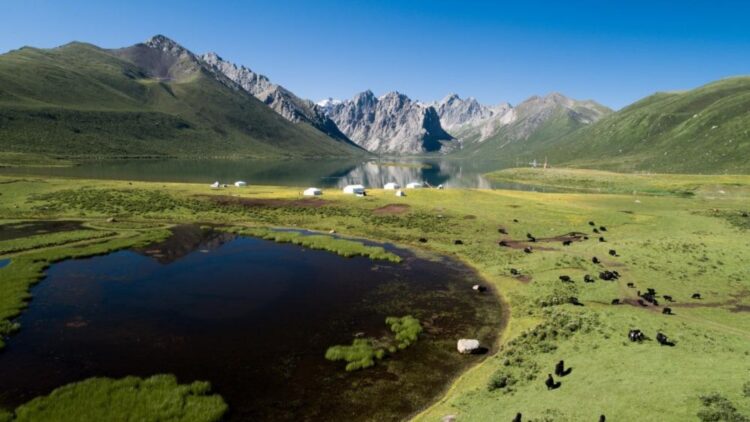
- In the Tibetan Plateau and parts of northwest China, the new vegetation moved moisture toward the plateau. This helped increase water there but reduced it in the northwest.
So, this proves that planting trees in a region can move water toward a different one, changing water balance in the entire country.
Importance of this for China
This country has a very large population and it depends a lot on farming, so water is an essential resource for:
- Drinking and daily life.
- Watering the crops.
- Keeping healthy ecosystems.
The study shows that changes on the ground, like planting forests or restoring grasslands, can redistribute the water between different regions. Some areas can gain more water, while others can lose. Understanding these effects is key for the country’s long-term planning because it helps decide:
- Where to plant more forests.
- How to manage water for people and crops.
- How to make sure the environment stays healthy.
The big picture
China’s afforestation efforts are incredible and show a strong commitment to the environment. However, planting forests at a great scale doesn’t just make the land greener. It also changes where water is available, sometimes creating challenges for areas that now have less water. Managing these changes carefully is essential. By studying how afforestation affects water, China can plan better for sustainable land use, agriculture, and environmental protection.
So…
For anyone interested in China’s environmental policies or global water management, this shows how human actions—even ones meant to help the planet—can have complex effects. It’s a reminder that planning and understanding the full impact of changes is key to protecting both nature and human communities.
What do you think about what China is doing? Should this be done in other parts of the world? We’ll see if this idea will influence other countries.