
China has a hidden power… Something that most people don’t realize is that many of the devices we use can only work because of special materials (rare earth elements or REEs) that come from deep underground in China.
You may not know this, but rare earth elements are used in many important aspects of our lives such as: speakers and headphones, electric vehicles, clean energy systems, wind turbines, medical treatments like cancer therapy, and even defense systems such as missiles. As you can see, they are everywhere. So, let’s learn more about these elements.
Where do they come from?
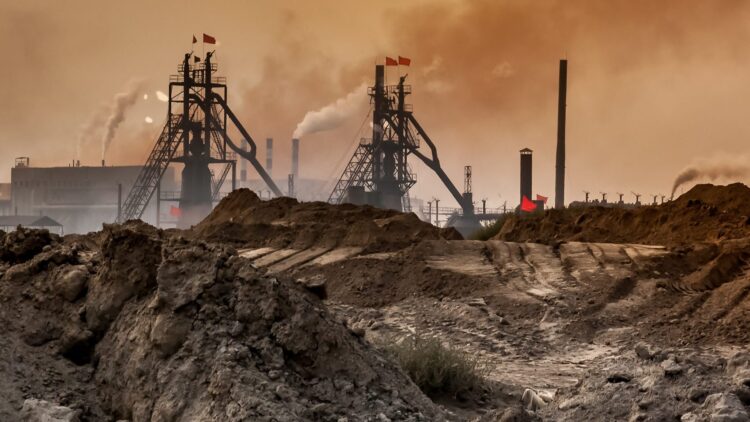
There is one place in the world that has more of these rare earth minerals than anywhere else. It’s called Bayan Obo, and it’s located in Inner Mongolia, a region of northern China. Scientists estimate that this area contains more than 40 million tons of rare earth elements. That’s about 40% of the world’s known supply.
In 2019 alone, almost half of the world’s production of rare earth minerals came from this region. That means that no other place in the world comes close to what Bayan Obo can produce. This makes it a very important place for technology and industry all over the planet.
What Makes Rare Earths So Special?
Rare earth elements are a group of 17 chemical elements. They have special properties: they react strongly to magnets, electricity, and heat. This is why they’re used in many high-tech and advanced tools. They are key for building renewable energy sources, modern electronics, airplanes, defense equipment, and medical tools.
But even though they’re important, getting them out of the ground is not easy. The process requires using large amounts of chemicals, including strong acids. These chemicals can be very harmful to the environment, especially when used in large amounts over a long period of time.
The Hidden Costs in Bayan Obo
The area around the Bayan Obo mine has suffered a lot. The mine is operated by big companies owned by the Chinese government, such as Baogang Group and China Northern Rare Earth Group. The mine started to grow in the 1950s with help from the Soviet Union. Since then, it has become a powerful symbol of Chinese industrial strength. But for the local people, the cost has been very high.
Residents say that by the 1980s:
- Crops no longer grew in the soil.
- Animals died after being exposed to pollution.
- Children were born with dental problems, and adults began losing their teeth early due to a disease called fluorosis.
- In one village, 66 people died of cancer between 1993 and 2005.
- Many people had to leave their homes and land. Some of them didn’t receive fair compensation when they were forced to move.
Next to the mine, there is a massive pond full of waste from the mining process. This pond holds over 150 million tons of toxic and radioactive waste. Because of this, the local population has dropped sharply—from 2,000 people to just 300 in about ten years.
Why Does the World Still Rely on China?
Even though many other countries could try to produce rare earth elements, doing it in a clean and safe way is much more expensive and slower. In the 2000s, the United States closed its main mine because of environmental problems. By that time, China was already producing 95% of the rare earth elements used around the world.
Many wealthy countries chose to buy rare earths from China rather than mine their own, because it was cheaper. But now, China not only has the biggest supply, it also refines and controls most of the global production, which gives it a lot of power in the world market.
The Big Question
There’s something very ironic about this situation. The same rare earth minerals used to power clean energy technologies like wind turbines and electric cars are coming from a place where pollution has caused great damage—to the land, the water, and the people.
So now the world has a decision to make: Should we continue depending on one place for something so important, even if it causes serious harm? Or should we invest in cleaner, more responsible ways to get these minerals, even if it costs more money?
This is something many governments are still thinking about. Some countries like the U.S., Australia, and some in Africa are starting to work on their own rare earth mining again—but for now, China is still the main supplier, and Bayan Obo remains the most important source.