
“Clanker”: The sci-fi word people are now using for AI and robots. Have you noticed it? AI and robots are showing up everywhere — helping with your apps, delivering your lunch, driving cars, even rolling past you on the sidewalk. And with all these new sightings, there’s a word you might start hearing more often: “clanker.”
In 2025, clanker has become the go-to word when people talk about tech stepping in to do jobs humans used to handle. Some folks toss it out with a laugh, others with a sigh, and a few with that “oh great, here we go again” vibe. However it’s said, the word’s catching on fast — and if it hasn’t hit your ears yet, don’t worry… it will. So, where did it come from, and why is everyone suddenly saying it?
From Star Wars to Sidewalk Robots
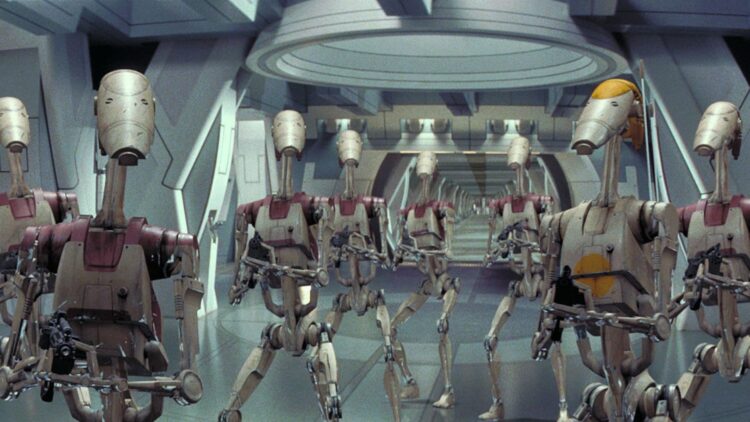
In Star Wars, clone troopers used to call battle droids “clankers.” It was just a quick, throwaway nickname — something you’d yell in the middle of a fight scene. Fans liked it and started using it online too, mostly as a fun bit of sci-fi slang.
But somewhere along the way, it escaped into real life. Now, the term is shouted at four-wheeled delivery robots, written in TikTok captions with millions of views, and even dropped in politics. U.S. Senator Ruben Gallego used it while promoting a bill to ensure customers can still talk to a real person instead of an automated system if they choose.
Why People Are Saying It Now
The word clanker is showing up everywhere, right alongside the boom in AI — self-driving cars rolling through city streets, chatbots picking up your calls, and little delivery bots bringing lunch right to your door. Some people think it’s cool. Others? Not so much. For them, clanker is the quick, snappy way to say, “Yeah… not a fan,” without going on a long rant about robots taking over.
Linguists say this happens when we start talking about machines like they’re people — it makes it easier to joke about them, tease them, or even group them together like their own “type.” And as technology wedges itself into more and more parts of our lives, having a single word to sum up your feelings can be pretty handy.
The Bigger Picture Behind “Clanker”
This one little word reflects a bigger mood. A global report by Gartner research shows that 64% of customers prefer companies not use AI in customer service, and 53% would consider switching brands if they found out one was using it. That’s a lot of pushback for something that’s still relatively new.
It’s not the only AI-inspired nickname either. “Slop” is popular online for AI-generated content that looks cheap or obviously artificial. Others like “toaster” or “tin skin” borrow from shows like Battlestar Galactica. Each one carries the same underlying thought: we see how fast AI is becoming part of our world, and we have feelings about it — strong ones.
Will “Clanker” Stick Around?
Like many internet trends, it’s hard to say if clanker will last or fade in a year. Right now, it’s having a moment — and it’s the perfect example of how pop culture language can escape its original story and become something new.
What began as a throwaway sci-fi term is now part of a much bigger conversation: about technology’s role in our jobs, how we interact with machines, and how comfortable (or uncomfortable) we feel when metal and code take the place of a person.
One thing is certain — the next time you spot a delivery bot rolling down the sidewalk, the word clanker might just pop into your head. And whether you say it out loud or not, you’ll know exactly what it means.