
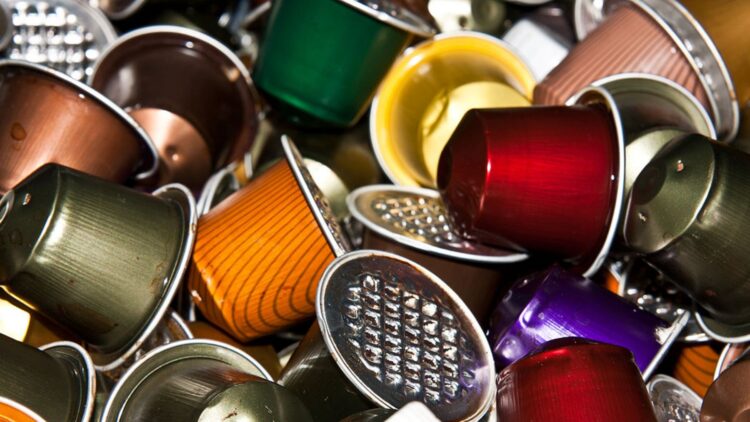
Making coffee in the morning is our favorite ritual, and if it’s from a capsule, the ritual is faster, right? And it tastes good, we can’t deny it. The more coffee, the happier we are, and the easier it is to prepare, the more coffee we drink. That’s the equation, and I don’t think we’re the only ones doing it.
But maybe behind this convenience there’s something they’re not telling you, and that is that the capsules could be releasing substances that affect our hormones.
It was discovered in Spain by Professor Nicolás Olea. This man found that many coffee capsules (especially those made of plastic or aluminum with coating) can release endocrine disruptors, something that alters your hormonal balance. And no, that’s not good. But how much is our daily exposure to these chemicals really affecting us?
What are endocrine disruptors
They are compounds found in plastic or metal packaging (like in bottles, creams, cosmetics, kitchen utensils…) and once they enter the body, they imitate or block our own hormones, making them not function normally.
The effects can range from thyroid or fertility issues to metabolic problems or complications during pregnancy. It’s definitely not something to take lightly, it’s serious. Some even believe there could be a link between these compounds and diabetes or obesity in Europe.
In fact, several studies have found links with the increase of those conditions.
“The problem is not the dose, but the constant exposure. We call it the cocktail effect”, explains Olea.
So it’s not that one capsule will poison you, but prolonged use does, because your body can’t fully eliminate those substances.
Heat turns coffee into a risk
It all happens because capsule coffee machines work with pressure and high temperatures, exactly the conditions that make certain plastics or coatings release compounds like bisphenols or phthalates.
And yes, several studies published in PubMed have detected “estrogenic” activity (similar to that of a hormone) in some capsules, and in some cases, more than 20 types of chemical substances with this potential have been identified.
And the law?
In Europe, only compounds that are clearly carcinogenic or toxic are banned, but there are no solid regulations regarding hormone disruptors.
That means that as long as certain limits are respected, many products remain on the market, even if they are harmful in the long term.
The “cocktail effect”
Basically, our body doesn’t know how to defend itself, and each exposure gets “stored” inside it. Over time, that mix can affect fertility or increase the risk of other kinds of diseases.
Other places where they hide
The famous “new car smell” that many people love, for example, comes from volatile compounds like phthalates and bisphenols, and when the car spends hours in the sun, those substances are released and you breathe them without realizing it.
But they are also found in food packaging, cosmetics, shampoos, and sunscreens.
What you can do to reduce exposure
- You can switch your coffee maker for a traditional Italian one (the coffee tastes much better), or you can choose compostable or stainless steel capsules.
- Avoid reheating food in plastic containers.
- Air out your car before driving if it’s been in the sun.
- Use glass or stainless steel bottles instead of plastic.
- Check your cosmetics and use those labeled “phthalate and paraben free”.
No one is saying you should stop enjoying your coffee (that would be cruel, don’t you think?). But you should know what’s behind every sip. That way, you can enjoy your coffee knowing there’s nothing to fear!