
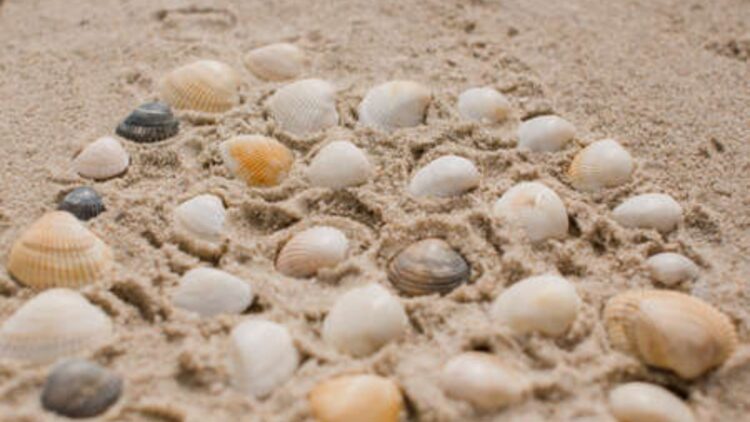
Who would have thought that seashells, yes, the ones from the beach, could become one of the greatest allies of sustainable construction? Thanks to science, a group of researchers has shown that these remains that nobody wants in the fishing industry could be used to make concrete with far fewer CO2 emissions, without losing any strength or reliability. It is about giving a second life to something that was simply considered waste, but on an industrial scale.
They were looking for solutions
Concrete is the second most used material on the planet, only water surpasses it, and it is responsible for almost 8 percent of global CO2 emissions into the atmosphere. A huge amount, even if it sounds like a small percentage. So it is essential for our planet that alternative measures begin to appear. We have already seen that other options are being researched, and now seashells seem like a very good one.
From waste to treasure
The idea was born at the University of East London, where they noticed that the fishing industry throws away tons of shells and scallops every year. They smell bad, are a nuisance and end up in landfills. But these shells are usually full of calcium, and that is vital for cement. So they tried grinding them into powder, and when mixed with concrete they can replace part of the traditional cement.
Less cement, less CO2
By using seashell powder, the emissions associated with concrete can be reduced by up to 36 percent. Making cement requires very high temperatures and a lot of energy, but by reducing its amount, the impact is reduced as well.
And what about strength?
That is the big question. It is not enough for it to be sustainable if buildings are going to collapse. They need to be strong and safe. Calcium improves the microstructures of concrete and makes it much more compact, while remaining solid, stable and durable. So it is a win win.
Denser and more stable
This marine concrete performed very well in the analyses. It proved to be more compact in some cases and can be an advantage in infrastructures exposed to harsh climates or a lot of humidity. And it does not add chemical substances. It is a natural material we all know and it is very safe.
Circular economy
Sustainability often goes hand in hand with common sense. In many regions, this type of seashell is one of the most abundant local wastes. If they began to be used in construction, they would reduce the extraction of new raw materials and lower waste management costs. In coastal areas, these shells are everywhere.
Economic advantage
There are more and more environmental regulations and sustainability requirements, and it is becoming mandatory, by competition rather than necessity, to reduce the impact of construction. It is clear that those who get ahead with this kind of solution will be better positioned in the market that is coming, just like what happens in technology.
Innovation is not complicated
It never is. You just have to look at what we already have from a different angle. Where one person sees trash, another sees gold. And that is what has happened here. Tons of seashells have ended up as waste, but they are a viable, scalable and realistic solution.
Building without destroying the planet
Reducing concrete emissions by up to a third will not save the world on its own, but it could start to make a difference. Little by little, it could truly be a first step toward change. Who knows if the future of our cities lies in what we consider waste?