
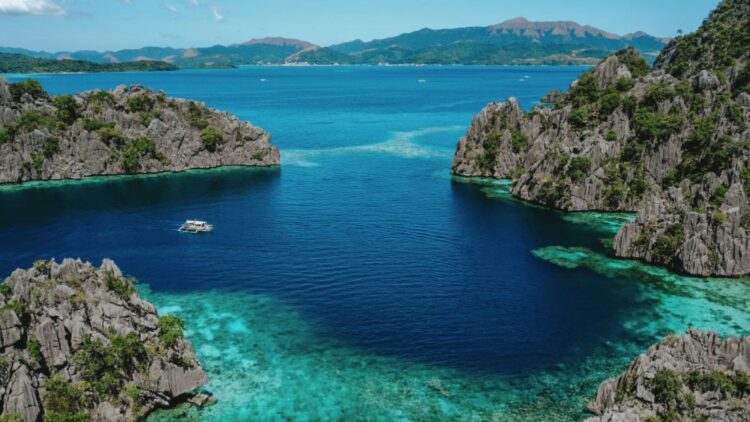
Have you ever heard about the coral triangle? This is a unique place under the ocean, so full of life that scientists compare it with the Amazon (an underwater version of it). It’s a huge marine region that spreads across the six countries of the Pacific and has more marine species than in any other place in the world.
Experts consider it the most diverse marine ecosystem on Earth, a truly natural treasure that feeds millions of people and keeps the planet’s balance. Like the Amazon, the coral triangle is crucial for life, but it’s also at risk. So, let’s learn more about this wonderful place.
A place richer than the Amazon rainforest
As we mentioned before, the coral triangle is considered the most diverse marine ecosystem in the planet, we can find:
- 75% of the world’s coral species
- Over 3,000 species of fish
- And more living creatures than all the marine species found in Europe combined
Some coral reefs inside the coral triangle have more species than in the entire Caribbean Sea. This means this place is like a huge underwater city where millions of living beings live and depend on each other. This is why , many scientists call it ‘’The Eden of the Atlantic’’ or ‘’Classroom of the Sea’’ because it’s a place where life has evolved and adapted for millions of years.
Where can you find the coral triangle?
It covers 5.7 million square km of the Pacific Ocean and it spreads across the waters of Indonesia, Malaysia, Papua New Guinea, the Philippines, the Solomon Islands, and Timor-Leste. This equals half the United States, a huge area full of reefs, fishes, corals, and marine plants.
It’s not a river nor just a place; it’s a triangular area of the ocean where marine currents, geography, and climate combine perfectly so that marine life thrives.
Its location between the Pacific Ocean and the Indian Ocean helps bring together warm waters, nutrient-rich currents, and complex underwater landscapes. These factors make it one of the best environments for marine life to grow and survive.
Importance of the coral triangle
This is like the heart of the ocean because it supports complex food chains — from tiny plankton to large fish — and helps balance the global ecosystem. Coral reefs are more than a beauty from underwater, they are also essential for life because:
- They produce oxygen.
- They protect coastlines from storms.
- They provide food for millions of people.
In fact, it’s estimated that 120 million people depend directly on the coral triangle to survive. This is why protecting it means caring for both nature and human communities.
Threats
Unfortunately, like the Amazon, the coral triangle is at risk. Scientists warn that this underwater paradise suffers the effects of humans. Let’s have a look at threats the coral triangle is facing:
| Threat | Impact Level | Recovery Time |
| Destructive fishing (like using dynamite or poison) | Immediate | Decades |
| Climate change (warmer waters, coral bleaching) | Severe | Centuries |
| Pollution (plastics, waste, chemicals) | Moderate | Years to decades |
| Mining and oil extraction | Localized | Permanent |
These threats are destroying corals that lasted thousands of years to form. Harmful fishing practices kill not only fish but also the fragile coral structures that serve as their homes. Also, pollution adds toxic substances to the water, while global warming causes the ocean to heat up, turning colorful coral reefs white — a process called coral bleaching.
Protecting the coral triangle
As you can see, this is one of the most valuable natural treasures on Earth, it has more marine species than in any other place on our planet and it keeps the balance of the oceans. So, if we lose it, thousands of species would disappear and many coastal communities could lose their main source of food and income.
That’s why, scientists and conservation groups are asking for:
- Promoting sustainable fishing
- Reducing pollution
- Creating marine protected areas
- Supporting eco-friendly tourism
So, by taking care of this underwater Amazon, we can ensure that future generations will still be able to admire its beauty and benefit from its natural resources.