
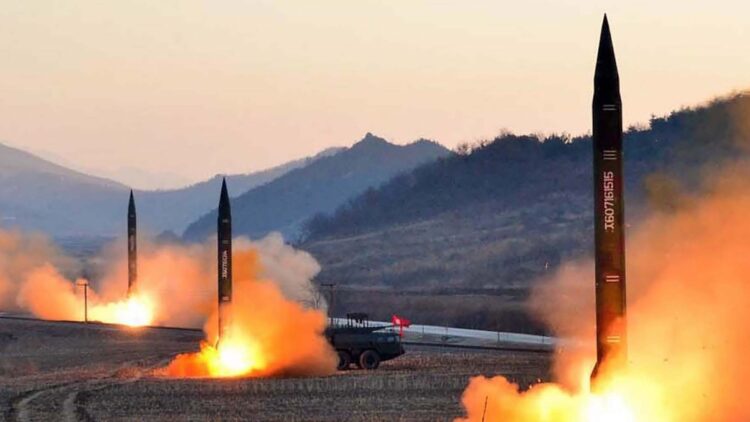
Nowadays, the probability of a nuclear war is higher, but which are the countries that would survive in case of a global disaster. What it’s believed is that countries like Mexico and Canada were the safest countries in a nuclear impact, but a recent scientific study has shown this is not true. The study focuses on aspects like famine, breakdown of food production systems and ecological damages. According to these aspects, other countries than Canada and Mexico are considered to maintain a functional society for a decade after the conflict.
It doesn’t have to do with nuclear refuges, the real defense strategy is based on geographic location, agricultural production and food self-sufficiency. So, let’s see which are the safest countries if a nuclear war started.
Risk of a nuclear war
The recent attack of the United States on nuclear facilities in Iran has increased the fear of a nuclear war. This feeling is not something new, but now it’s the main topic of debate in society.
Of course, a nuclear war would have devastating effects at the moment of the attack, but also during years after the impact. We are talking about side effects that would affect the whole planet, even places that weren’t directly attacked.
Global famine
This is one of the most serious risks a nuclear war can cause. According to a study done by Nature Food magazine, if Moscow and Washington, for example, started the nuclear conflict and around 100 atomic bombs were launched, a major food supply disruption would happen across the world.
Imagine the smoke of the explosions blocking the sunlight, disrupting the global climate and drastically reducing food production. According to the study, this will lead to a food crisis so serious that up to two thirds of humanity would die of hunger.
‘’We must avoid the beginning of a nuclear war’’
Alan Robock is a climate scientist and co-author of the mentioned study. He talks about the data shown in the study which makes clear the only solution in the long-term is to avoid these weapons: ‘’If nuclear weapons exist, they can be used’’. More weapons are being developed and distributed to different countries, so the more weapons, the more possibilities to start new wars.
Countries with the most probabilities to survive the attack
There are two countries where the hope of their citizens surviving the attack is higher than others, at least for a decade. These countries are Argentina and Australia, which were chosen due to studies comparing the vulnerability and the capability of recovering of different countries in case a nuclear war happened.
Let’s see in detail why these countries were considered the ones with more chances to survive a nuclear war.
Far from the northern hemisphere
The geographic location of Australia and Argentina is key. Why? Because major nuclear powers are in the northern hemisphere (U.S., Russia, China or Europe) and Australia and Argentina are far from this place. This means they probably wouldn’t be direct targets nor would receive the blast of the explosions. Due to the distance, they would have time to react and protect themselves.
Agricultural production
These chosen countries also have another advantage: a strong capability of agricultural production. According to Alan Robock, Australia and Argentina already grow huge amounts of products like wheat which is more resistant and adapts to adverse conditions.
We need to start alternatives to traditional agriculture
William Chen, a food science professor at the Nanyang Technological University in Singapore, warns the psychological impact of a nuclear war could be even higher than direct physical damage. That’s why countries are recommended to start looking for new alternatives to guarantee their food safety, other than traditional agriculture systems. For example:
- Mushrooms or fungi growing.
- Interior agriculture.
- Insects protein production.
- Food based on microalgae production.
So, countries should start thinking about a future possible nuclear war and start incorporating new systems that will allow their citizens to survive this possible attack. As Robock said, wouldn’t it be much easier if no nuclear weapons existed?