
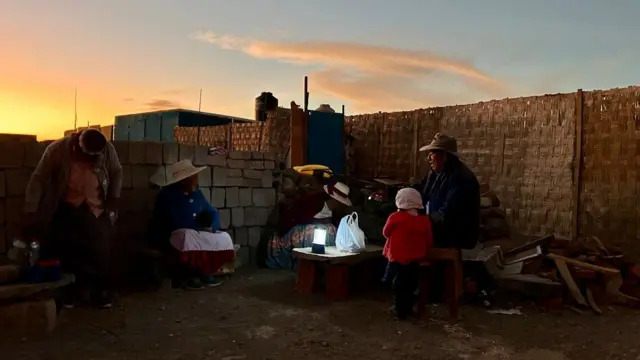
We are in the 21st century but not everywhere in the world. There is a place in Peru where it seems time stopped decades ago. It is called Pampa Clemesí and, although it is right next to the largest solar plant in the country, its neighbors are still living in the dark!! Literally. Less than a kilometer away from a plant that generates clean energy for half the country, there are houses that do not even have a plug. Not one.
Bathed in light… but not electric.
The plant in question is the Rubí Power Plant, a huge complex of solar panels that began installation in 2018 and that, in 2024, officially became the largest solar generator in Peru. It produces about 440 GW a year. With that, entire cities are supplied. But Pampa Clemesí, 600 meters away, still uses flashlights and candles at night, that energy is not for them…
Promises that never arrive
The company responsible, Orygen, says it has invested in a plan to electrify the area. Some panels have even been donated to the neighbors. But without batteries or converters, those panels are not much use, they have the materials but not the means. And here lies the paradox: electricity travels hundreds of kilometers to Lima or Arequipa, but it does not cross the 600 meters that separate the plant from the town!
Moquegua, the region where all this is, is one of the sunniest places on the planet. Ideal for solar energy. Peru knows this and that is why renewables are growing at a good pace: only in 2024, growth was 96%. Even so, that has not brought development for everyone. On the contrary: technological progress goes one way, and the basic needs of towns like Pampa Clemesí go another, creating a major gap in the Peruvian population.
The challenge of renewables
It is especially sad because Peru is not only a country that bets on renewables, but also the second largest producer of copper in the world, a key material for all this. Where does that copper go? To export. Where do the investments go? To wherever there are profits. Areas with small populations, like Pampa Clemesí, are not on that priority list.
Orygen insists that it is part of the state plan to electrify the town and that it has already invested 800,000 dollars in a first phase. But the reality is completely different, the houses are still without light, without refrigerators, without the possibility of charging a phone or turning on a radio. Nothing. And meanwhile, from their windows, the neighbors see the plant lit up every night as if it were a city. A shining mirage that is useless to them. How unfair!
And of course many of us think that the energy transition is worthless if it leaves out the most vulnerable, you can produce all the gigawatts in the world, but what good is it if that energy does not serve to give every house in the world a simple plug?
Energy transition but not for everyone.
Energy poverty is real, and not only in remote areas of Africa or Asia, also in Latin America, also in Peru, also in a town that lives in the shadow (or rather the glow) of a plant that symbolizes the future… The future of who? In their case, it only confirms that they remain trapped in the past year after year while the world moves forward.
Renewable energy is necessary, yes, but it also has to be fair. If not, we will be changing technology but not the model and we will be condemning the same people to the same fate. And that is a difference that, for places like Pampa Clemesí, means everything.