
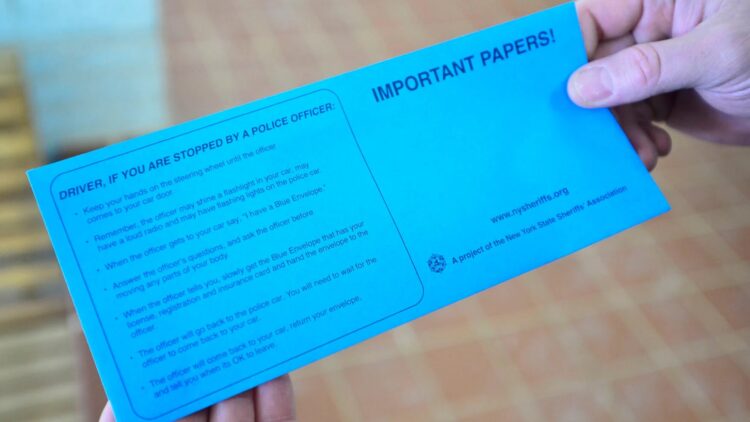
Road safety is important for all states, and all of them are taking very strict measures to stop problems on the road. Each in their own way, that is why Virginia has just expanded through the DMV the “blue envelope” program. And it is that, until now, it is the best way for the police to interact with people with disabilities that are not always physical. This allows the police to know before interacting that they are dealing with a person with special needs.
More changes in traffic laws
In recent months, several U.S. states have tightened their rules against speeding or using the phone while driving, because they continue to be one of the main causes of accidents and somehow this has to be stopped.
Now, in addition to much higher fines, in some cases there is a risk of jail for repeat offenders and automatic cameras that catch those who run a red light or press the accelerator too much have multiplied, something that started in New York and is already spreading to the rest of the cities. More control and more technology will end up eliminating risks on the road, or so they intend.
What is the blue envelope program
The Blue Envelope Program, supported by House Bill 2116, is a program that allows driver’s licenses to carry a special designation if the holder has a disability. And that is where the blue envelopes come into play: each driver can carry one in their car with the necessary information so that an officer understands their situation in case of a stop.
Inside are key data about the driver’s condition, but also copies of basic documents such as the license, car registration or insurance. This way, everything is in the same place and unnecessary tensions are avoided.
How it works in a police stop
The goal is for both the driver and the officer to feel safer. For the person with a disability, the blue envelope is the guarantee that their situation will be understood without having to explain it in a stressful moment. For the police, it is a tool that gives them the right information to act correctly without misunderstandings.
An autism spectrum disorder, a hearing disability or any other “invisible” condition (understand that they are not invisible, please) can complicate a stop if it is not interpreted well, so this blue envelope helps that not to happen.
The Blue Envelope Program is a program designed to improve interactions between law enforcement and people with conditions or disabilities that may cause communication problems.
Rules that affect everyone
There are other new measures too, since July 1, all rear passengers are required to wear seat belts, it is something so obvious but not always followed that it is important to repeat it.
Request the BEP
If you want to participate in the Blue Envelope Program in Virginia, you can go to any Virginia DMV customer service center and ask for one; you do not need to present medical diagnoses or documentation of any type of disability. A family member or guardian can also do it if the beneficiary cannot do it themselves.
Once you are given the blue envelope, the ideal is to keep inside the important documents such as vehicle registration, proof of insurance, driver’s license and emergency contact information. Place it in an accessible place in the car, such as the glove compartment or the driver’s visor to have it ready in case the police stop you.
Why are these changes important?
Because it allows many people with disabilities to be treated correctly in a moment of extreme stress, and to this are added other important changes so that road safety is the most important thing.
The expansion of the blue envelope program makes Virginia a reference in legislative traffic innovation, now the road is much more inclusive and the police will have better tools to assist drivers! Not everything is about giving fines, empathy is also important!