
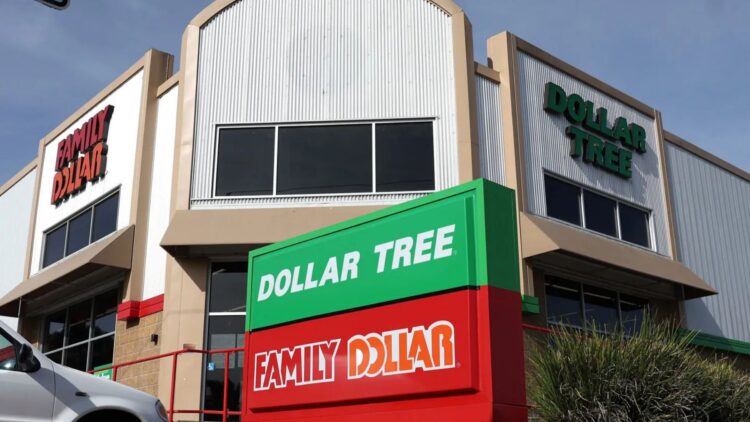
Dollar Tree has thrown in the towel. After years of failed attempts, it has decided to put an end to a chapter that began in 2015 with high expectations and now closes with a taste of defeat: the chain will sell Family Dollar, its discount store subsidiary, for barely one billion dollars. The same business it paid 9 billion for almost a decade ago. The sale is still pending approval, but the breakup has already made the news, the end of a relationship that never really worked.
Who will take over?
Brigade Capital Management and Macellum Capital Management are the lucky ones who will take charge of Family Dollar. Both are betting on reviving a brand hit by strategic mistakes, poorly maintained stores, and a customer base that no longer responds like it used to…
“After evaluating our options, the management team and the Board of Directors believe that handing over the reins of Family Dollar to Brigade and Macellum offers the best solution”, Dollar Tree said in a statement.
What went wrong?
The story is clear: Family Dollar was never profitable, never adapted, and instead of adding, it subtracted. The result: nearly 8 billion lost, thousands of poorly maintained stores, and a customer base that stopped responding a long time ago. The strategy that once promised to conquer the low-cost market ended up being an unsustainable burden.
Dollar Tree had an idea, and it wasn’t a bad one: they wanted to buy a rival to grow, cut costs, and expand their market. But the execution was a disaster. Family Dollar stores were old, poorly located, and often just a few blocks from each other. Instead of adding, they consumed each other as cannibals
On top of that, prices no longer seemed like bargains, the stores were overcrowded, and growth was too fast. Add to that the fierce competition from giants like Walmart, inflation, and tariffs left over from the Trump era. A perfect storm that didn’t even spare the cheapest items.
A chronicle of a death foretold
From the beginning, it was clear that the two brands didn’t share the same DNA. While Dollar Tree targeted middle-class consumers, Family Dollar focused its efforts on more vulnerable communities. The clash in styles, along with logistical and inventory problems, made integration difficult.
A year after the merger, the first investors were already asking them to get rid of Family Dollar. Today, that warning becomes reality.
What will happen now with the stores?
The purchasing firms have already indicated their intention to relaunch the brand, although there’s a long road ahead. The stores will remain open while the deal is finalized and restructuring plans are defined.
But what’s clear is that the new investors have a long and tedious journey ahead. Many of the 8,000 stores they bought were in terrible condition, so they will have to conduct a market study to determine which stores will stay open and whether it will be worth reinventing or not.
For the employees, the news is bittersweet. Although no mass layoffs have been announced, the uncertainty remains. In a context where retail is undergoing rapid transformation, Family Dollar will have to reinvent itself or risk disappearing completely.
In the case of the employees, the future is a bit uncertain. No mass layoffs have been announced, but the possibility of cuts is not ruled out once the deal is closed.