
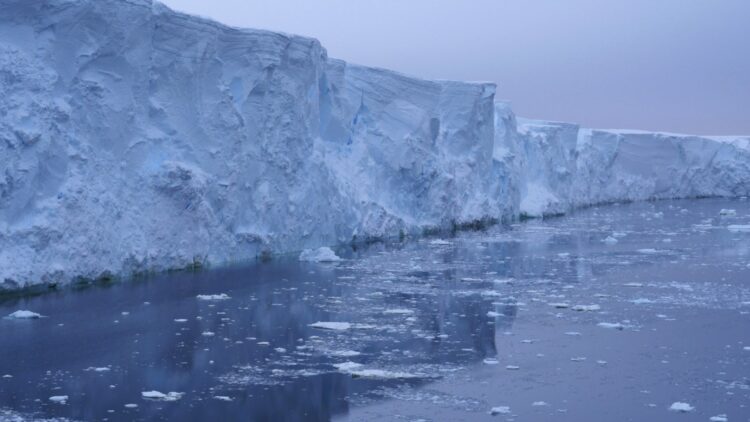
Antarctica is making headlines again because the glacier known as the “Doomsday glacier” (Thwaites) is experiencing hundreds of micro earthquakes, huh… And this is one of the largest glaciers, imagine micro earthquakes happening on top of it what could create on the rest of the Earth…
It is believed that those tremors are caused by the internal movement of the glacier itself, but it is clearly a sign that something is not right down there. The problem is that Thwaites is already responsible for around 4 percent of the current rise in sea level, and every year it loses about 50 billion tons of ice. An enormous amount if you think about it… And of course, these movements are making everything speed up.
The Doomsday Glacier
Thwaites is not just any glacier, it is THE glacier. More than 120 kilometers long and acts like a giant plug that holds back other masses of Antarctic ice from flowing into the ocean…we cannot lose it.
And the earthquakes?
Scientists say this phenomenon is known as “stick-slip”, which means the glacier slides in small jumps. It gets stuck, builds up tension, and then suddenly moves.
For scientists, this pattern is a clue that the glacier is not stable, that it is moving, adjusting, rearranging itself, whatever. And that is not a good sign in a structure of this size, imagine that…
Heat and ocean
Much of this activity is concentrated right where the glacier comes into contact with the sea. There, warmer ocean water is weakening the base of the ice, heat that is directly linked to climate change, of course.
This causes it to slide, fracture, and lose mass much faster. And it could be the first of many to melt.
A threat
That is how experts describe it, one of the greatest threats of the 21st century, of the natural world, of course. Because if it were to completely collapse, it could cause sea levels to rise by up to three meters. Enough to make many coastal cities disappear and force millions of people to relocate.
That said, an immediate collapse is not expected, but if the glacier continues with these processes, it will likely happen sooner rather than later.
Global impact
Sometimes it seems like half a meter of sea level rise is not a big deal, but we know it is. Fifty centimeters would expose millions of buildings to frequent flooding and many other problems.
And now what?
Researchers are using these seismic records to refine climate models and understand better what could happen in the future. Knowing how, when, and why these internal slides occur is key to estimating the real speed of the melting.
The priority right now is to monitor the glacier constantly, combining seismic data, satellite images, and ocean measurements. Every new piece of data helps decode a system that, until very recently, was completely hidden under kilometers of ice.
A clear sign of human impact
These earthquakes beneath the Thwaites glacier are not an isolated oddity. They are a direct signal of the impact of global warming, and human being is responsible of that… Climate change does not only melt ice from above, it is also altering its behavior from below, from within.
For science, this finding reinforces an idea that is becoming harder and harder to ignore, that the time to stop the most extreme effects of climate change is running out. And the Doomsday Glacier has become, without intending to, one of the most precise clocks we have to measure it.