
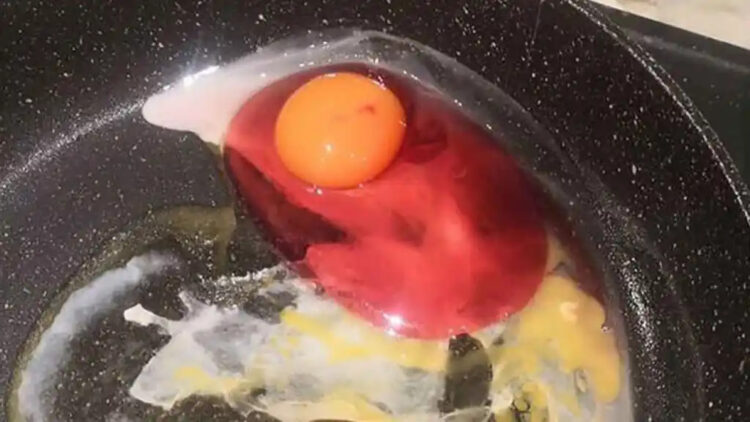
It’s not the classic salmonella and it can be even more dangerous. It came to light thanks to the videos of a virologist on TikTok, in his video, he warned about the infections that pseudomonas can cause: “Never eat an egg whose egg white is this colour (reddish) or another suspicious colour (greenish)”.
The curious and worrying thing is that many times the egg doesn’t even smell bad or look rotten. But just by carefully checking the colour of the egg white you can detect something that’s not normal. And no, don’t confuse it with the typical red spots that sometimes appear and only indicate a small blood vessel that broke during laying. Here we’re talking about a general colour change, not a dot.
What is pseudomonas?
Bacteria of the genus Pseudomonas, especially the species Pseudomonas aeruginosa, are known for their resistance to many antibiotics. This characteristic makes treatment more difficult and increases the risk of complications in case of infection.
What does this bacteria cause?
This type of contamination can affect respiratory, skin, or urinary health. In serious cases, especially in people with weakened immune systems, cases of pneumonia or systemic infections have also been documented
The colour doesn’t lie
What gives away this bacteria is that, as it multiplies, it produces pigments that colour the egg white. So if you open it and see something greenish, reddish or with a strange tone, be suspicious. Under ultraviolet light, it can even glow. But you don’t need to be CSI to see it: if the egg white isn’t clear and shiny like always, something’s wrong.
There are also eggs that explode (yes, explode)
Although it’s more typical in industrial environments, there are cases where the gas buildup caused by the bacteria makes the egg explode. At home it’s rare, but what can happen (and happens more often) is that when you open it there’s a sour, rancid, or downright disgusting smell. If that happens, don’t hesitate: straight to the trash, we don’t want a new Ebola wave.
How to avoid eating a contaminated egg
The key is not to rush. Before adding the egg to the frying pan or the cake batter, crack it into a separate plate (preferably white) and take a good look at it. Weird colour? Texture too runny or too rubbery? Does it shine in a strange way? Better not risk it: trash it and grab another.
And be careful with storage:
- Always keep eggs in the fridge, away from sudden temperature changes. The ideal place to store eggs is the top shelf of your refrigerator.
- Never wash eggs, neither before using them nor before storing them. The shell is porous and if it has any type of bacteria, it can transfer to the inside.
How to properly disinfect your kitchen to avoid bacteria
Just like salmonella, bacteria like pseudomonas can survive on damp and poorly ventilated surfaces. That’s why it’s essential to pay special attention to sinks, cutting boards, countertops and sponges. These are hot spots where microorganisms accumulate and spread easily.
- Wash surfaces with hot water and soap. First remove any visible residue.
- Disinfect with diluted bleach (one part to ten parts water) or certified disinfectant products. Let it sit for at least 5 minutes.
- Dry with disposable paper towels, avoid reusing damp cloths.
- Don’t forget the utensils. Wash knives, containers and mixers with hot water after each use.
If you have a dishwasher, run it at the highest temperature you can. And above all, replace sponges and cloths regularly!! They collect bacteria even if they don’t look dirty. The ideal is to change them weekly or disinfect them in the microwave with vinegar for 1 minute.
We know you don’t need to be a biologist to spot a suspicious egg, but anyone can have a slip-up.