
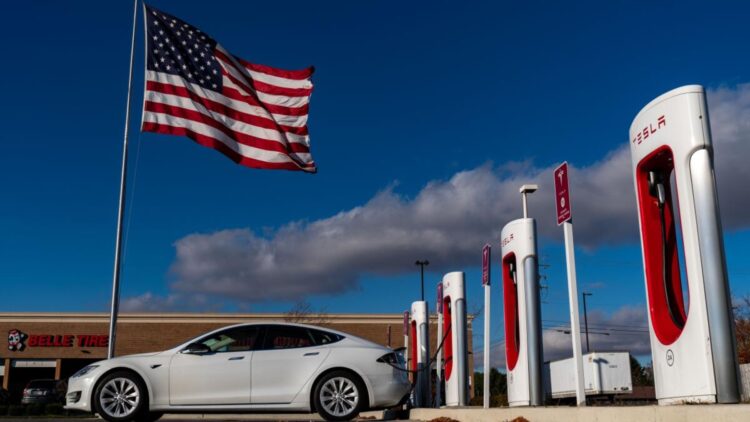
Electric vehicles are getting more popular in the U.S., many people already use them and others are thinking about buying them. However, these vehicles need electric chargers to properly work, and without enough charging stations owning one of these cars might be complicated.
Today, we want to explain a legal fight happening right now in the United States that could affect electric vehicle charging stations across the entire country. So, let’s learn more about this legal situation.
Electric chargers funds
In 2022, the U.S. government approved a very large infrastructure law, in which part of the money included in this law was for helping states and cities build charging stations for electric vehicles and also hydrogen fueling stations.
The goal was to ease the use of electric vehicles and support a cleaner way of transport. However, according to several states, the federal government stopped the approval of new funds for two of these programs. This means that many projects that were already planned are now paused or at risk of not being finished.
States suing the government
A total of 16 states and Washington, D.C. have filed a lawsuit against the U.S. government. The lawsuit says the government is blocking money that Congress already approved for electric chargers.
California Attorney General Rob Bonta explained that the Department of Transportation has refused to approve new funding for these charging programs. According to the lawsuit, this decision puts $1.8 billion in federal funding at risk.
One of the affected programs was designed to distribute $2.5 billion to:
- Electric vehicles charging stations.
- Hydrogen fueling stations.
The states say that blocking this money stops them from improving transport and offering better options for their communities.
Government officials
Tob Bonta described the decision of the government as irresponsible. According to him, cutting these funds:
- Delay the fight against air pollution.
- Affects the efforts against climate change.
- Stops innovation.
- Reduces the creation of green jobs.
- Leaves many communities without access to clean and accessible transport.
So, stopping these programs causes more issues than benefits.
Not the first issue about these funds
This is not the first issue related to the money for electric chargers. In June, a federal judge stopped the Trump administration from withholding funds from 14 states. That case involved a different $5 billion electric vehicle charging program approved in 2022.
Even after that court decision, the Department of Transportation later suspended the same $5 billion program again and canceled previously approved state spending plans.
This back-and-forth has caused confusion and delays for states that were counting on this money.
Donald Trump
The U.S. President Donald Trump has taken several measures that go against electric vehicle expansion. Among these measures we can find:
- Ending the $7,500 tax credit for people who buy these types of vehicles.
- Signing a resolution to block California’s plan to stop selling gasoline-only cars by 2035.
- Proposing weaker fuel economy standards to make it easier to sell gasoline cars.
Together, these actions show a clear shift away from supporting electric vehicles.
How this affects drivers
When funds for electric chargers are blocked or delayed, the effects can be felt on many levels. For drivers, this means:
- Less available charging stations.
- More difficult to travel long distances.
- Less confidence in switching to electric cars.
Even people who do not own electric vehicles can feel the impact, because transportation systems, environmental policies, and job creation are all connected.
To sum up
Whether you drive these types of cars, plan to buy one, or simply care about how transportation is changing, this legal fight could shape what American roads look like in the years ahead.