
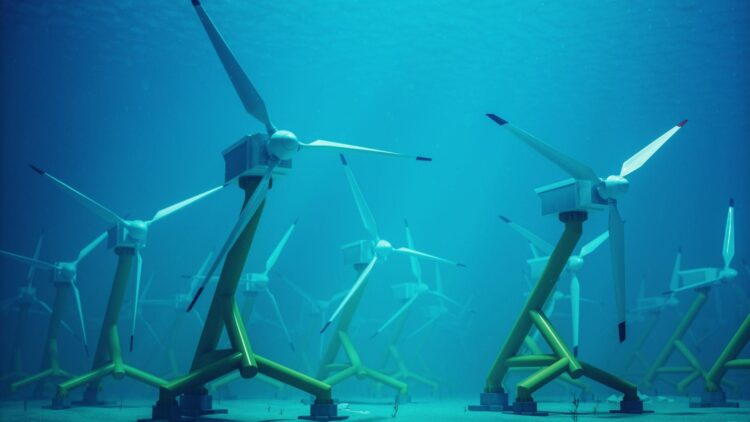
If you have seen the sea, surely at some point you have found yourself thinking about the power of its waves. Not in a poetic sense, although that too, since everyone can find inspiration wherever they want, but in terms of ecology. Well, beneath the waters surrounding Ynys Mon, off the coast of Wales, a very ambitious energy project is taking shape: using the eternal back and forth of the sea to produce energy. Yes, they want to generate 240 megawatts of clean electricity thanks to the tides. With this amount of megawatts, they could produce enough energy to cover the needs of around 180,000 homes.
And the ocean has always been there, and as you know, it never stays still, so maybe it is time to give it an important role in this energy transition as well.
An energy park under the water
The project is called Morlais and aims to take advantage of one of the areas with the strongest tidal currents in all of Europe, because the tides never stop. They come and go with the same force year after year, no matter if it is sunny or windy, the sea never stops moving. This would turn tidal energy into a stable and, above all, predictable renewable source, as we said, it does not depend on the weather.
And how is the movement of the sea turned into electricity?
It is very simple. They would place underwater turbines, like wind turbines, on the seabed. These marine currents would make the blades spin and that movement would be converted into electricity that would travel to land through submarine cables.
The best part is that in Morlais part of the infrastructure is already prepared for this, so it would work as an energy port for different developers and the park could be expanded little by little.
And the environmental impact?
This is one of the biggest concerns when talking about investing in the sea, but it is worth highlighting that the installation would not be done all at once, but in different phases and with constant studies to monitor the impact on marine life and ensure that the ecosystem suffers as little as possible.
Yes, the ecological footprint, if well managed of course, can be very low in the long term. It barely causes visual disturbance, unlike offshore wind farms, and it would have zero direct emissions, so it seems like a very good option to start taking steps toward the energy transition, right?
Much more than electricity
This project does not only generate energy. Like any large project, it moves the economy, creates jobs, boosts marine energy companies, and strengthens the supply chain as well. If we look at it this way, and if they can promise that it will not impact marine ecosystems, it is a very good investment option. Especially now, when renewable energy is also looking for a leader in Europe.
Less CO2, more balance
When it is fully operational, Morlais will prevent the emission of thousands of tons of CO2 each year, and its regularity will allow it to complement other renewables, covering moments when the sun or wind are not enough.
The future is on the seabed
For years we have looked upward, at the sun, or sideways, at the wind, but we have never stopped to think about what happens when we look down into the sea. Maybe the future is also under the waves and we have been ignoring it all this time.
If everything goes according to plan, we could start saying goodbye to giant wind turbines, because the turbines would be under the sea, which moves as it always has, and as we hope it continues to do!