
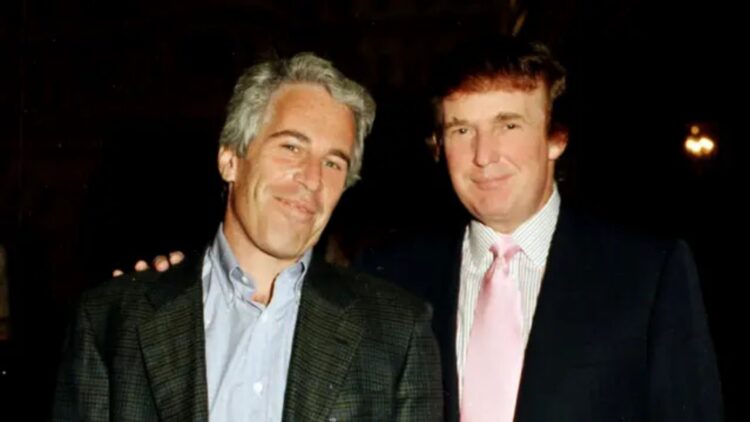
The reopening of the files related to Jeffrey Epstein has the world on edge, not because of what has already been revealed, but because of what has yet to be seen. After publishing the first batch of documents, which, by the way, were full of redactions and censored pages, the Department of Justice has wanted to make it clear that if the name of Donald Trump (yes, our beloved president!) appears in these documents, it will not be hidden, erased, or protected.
This was stated by the deputy attorney general, Todd Blanche, after criticism over the redactions seen in the first batch of files released. What is this about publishing files with names blacked out? There should be no preferential treatment for politicians, businesspeople, or well known figures, and that is what the Department of Justice wanted to make clear.
This measure may be coming a bit late, but we are still in a moment of maximum public pressure to find out who was close to that man and how far those relationships went.
“Public” documents
The DOJ made public part of the files related to Jeffrey Epstein and Ghislaine Maxwell. There were photos, records, contact lists, and hundreds of interviews. The world was expectant knowing what the Epstein case involves, but upon opening them, the surprise was that there were entire pages crossed out, names hidden, and key information covered with black rectangles. Who are they protecting? And above all, why?
Victims, the law, the official excuse
The institutional response was all too predictable. They say they are trying to protect the victims and not interfere with investigations or compromise ongoing legal proceedings. But when everything appears censored, even the names of public figures already known in these documents, everything starts to smell bad. The powerful once again remain on the sidelines.
“Nobody is safe”
Todd Blanche assured that there is no order to hide relevant names, and he explicitly mentioned figures such as Donald Trump, Bill Clinton, or other influential people, but of course, he added a “as long as it is legal to do so”. Aha. The fine print, as always.
Does Trump appear?
Yes, he had a social relationship, in principle, with Epstein in the 1990s. In fact, in the documents already published, his name appears in agendas, interviews, or references. For now, there are no new accusations. But many now wonder why, if there are no new accusations, there are so many redactions.
There will be more documents
A new batch of files has been confirmed for the coming weeks, and they will be legally required to make them public. Each new release is an even bigger unknown about what these documents are still hiding.
“Transparency”
The United States is living through a moment of great distrust toward institutions, and the Epstein case has become the citizens’ worst fear: that power investigates itself and decides what to tell and what not to tell. Power and money should never be above justice.
For the government, the balance is delicate. They want to promise transparency, but nobody is buying the message. Why have they covered up names? It is as simple as explaining that and showing the real documents.
A not very good precedent
How these files are handled matters, a lot. If the DOJ keeps its promise and does not protect anyone because of their last name or their political or economic position, they could come out strengthened, but the reality is that everything points to the opposite effect.
Beyond Trump, Clinton, or any other name, the Epstein case is becoming key to identifying whether the DOJ and the government are really willing to condemn these acts, but for now we only see opaque connections, institutional failures, and too many unanswered questions.