
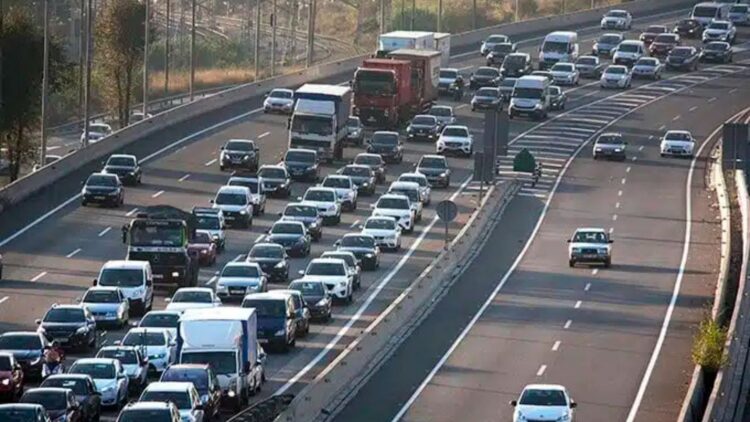
Oh, oh… We have bad news for those driving electric, hybrid, or hydrogen cars in our country. The Environmental Protection Agency (EPA) has said it has no intention of continuing to approve the programs that allow the use of HOV (high-occupancy vehicle) lanes even if you’re driving alone. The program, still active in over a dozen states, ends in September 2025, and no extension is in sight.
The decision directly affects states like California, Arizona, New York, Florida, and Virginia, among others. And even though these programs are managed by the states themselves, they need the federal government’s green light to continue. The EPA has said it will not grant it.
California already has an expiration date
Yep. California is one of the most affected states. It has more than half a million active stickers. The last day to request a new one will be August 29, and it will be valid until September 30, 2025. After that date, if you’re driving alone in your EV in the HOV lane and get caught, you’ll have to pay a toll or get a fine, be careful.
That sticker, which costs 27 dollars, has been a strong local incentive for years to promote low-emission vehicles. But it seems it no longer fits with the federal government’s new plans, which, by the way, will also end tax credits for EVs that same month…
How does this change things?
It’s hard to know to what extent this measure will slow down the adoption of electric or hybrid vehicles, but it certainly doesn’t help. The EV market is showing signs of stagnation, and taking away benefits doesn’t seem like the best fix… Or at least is what we think about it.
The change also puts on hold the extension that California Governor Gavin Newsom had approved, which aimed to extend the program until 2027. But without the EPA’s approval, that’s now meaningless.
This also affects half a dozen more states
It’s not just California. This decision directly impacts similar programs in 12 other states, including Colorado, Hawaii, Georgia, North Carolina, New Jersey, Tennessee, and Utah. In all of them, drivers with clean vehicles could enjoy fast lanes without carpooling!
The EPA insists that the HOV lane was created to promote carpooling, not to let certain vehicles bypass the rule just for being cleaner! And while it’s true that some states have good EV adoption rates without this incentive, California has been a leader partly thanks to these advantages.
Is that going to change now? Probably not. But forcing half a million cars back into regular lanes won’t improve traffic in cities like Los Angeles, not a good idea to be honest.
Hybrids to the rescue
This federal shift comes with other decisions that have also slowed the momentum of fully electric cars. The US government has even tried to stop California’s rule requiring all cars sold after 2035 to be zero-emissions. Add to that new tariffs and a less enthusiastic tone toward electric vehicles, and you’ll understand why manufacturers are now highlighting hybrids again.
The industry has already started to move, announcing more hybrid models and fewer electric ones. But all of this could change again in a few years, depending on how things play out in Washington.
Another setback for electric vehicles
If you have an electric car in the US, you’ve got a little more than twelve months left to keep using the HOV lane on your own. After that, it’ll be time to adapt, as always. And while this change won’t kill the EV market, it does add another barrier at a delicate moment.